“To mourn is to touch the edge of the wound and still walk on.” — Tsitsi Dangarembga, Nervous Conditions
Today, we honor National Grief Awareness Day by bringing greater understanding to grief and the many ways loss can affect our lives.

It’s also a reminder that grief isn’t something we can always see, and it doesn’t only come after the death of someone we love.
We often think it’s about losing a person, but loss can take many forms.
It can be a job you built your identity around. A relationship you thought would last. Your health. A friendship that slowly faded. A dream that didn’t work out.
You can even grieve a version of yourself.
Maybe you’re grieving who you were before the trauma, diagnosis, divorce, or when life changed in a way you never expected.
These losses can be difficult to talk about because there isn’t always a clear moment when they begin, and there isn’t always a ritual that tells us how to move forward.
You’re allowed to grieve what changed
Grief doesn’t follow a schedule. You might feel okay one day and struggle the next. You might think you’ve made peace with something, only to find yourself feeling it all over again.
There’s no single way to grieve, and healing doesn’t necessarily mean returning to the person you were before.
Sometimes, it means figuring out who you are now.
When grief becomes part of a bigger story
At 1M4, we see how deeply loss can affect families and communities.
We work alongside people grieving loved ones lost to police violence and families navigating the aftermath of mental health crises. The loss itself is only part of what people may have to carry. There can also be anger, trauma, unanswered questions, and the challenge of rebuilding a life that suddenly looks different.
That’s one reason the way we respond to people in crisis matters.
When someone is experiencing a mental health or behavioral health emergency, the first response can shape what happens next. A response centered on care and de-escalation can help someone access the support they need without turning a health crisis into a criminal one.
That belief is at the heart of a new project we’re building.
Our new TV series: Crisis Response

That question is at the heart of Crisis Response, a new scripted medical drama we’re developing at 1M4.
Set in Las Vegas, the series follows a mobile crisis response team as they navigate mental health emergencies and the complicated realities surrounding them. Inspired by real alternative response programs across the country, the show explores what can happen when people in crisis are met with care instead of control.
At a time when communities are rethinking what safety and emergency response should look like, Crisis Response asks a simple question:
What happens when the first person to arrive is trained to care? Learn more in this one-pager.
Want to help bring the series to life? Sign up through our support survey to let us know you’re interested in supporting the project.
Be gentle with yourself
If you’re grieving right now, you don’t have to rush through it.
Try naming what you’ve lost. Give yourself permission to feel whatever comes up without judging whether you’re handling it “well.” And when you need support, reach for it.
That might mean:
-
Talking to someone you trust
-
Working with a therapist
-
Joining a grief support group
-
Letting someone know you’re having a difficult day
You don’t have to navigate grief alone.
As August comes to a close
This month has been about community, generosity, and showing up for one another. We’re grateful to everyone who supported 1M4, whether you donated, shared our work, joined our sunset walks, or simply took the time to learn more about what we do.
Give 8/28 took place this past Friday, bringing Black-led and Black-benefiting nonprofits together for a national day of giving during Black Philanthropy Month. We hope you were able to support a cause that means something to you—and if you supported 1M4, thank you so much for believing in this work!
You can continue to support our work and help us expand access to mental health resources and create spaces where people can find support during life’s hardest moments.
August may be coming to a close, but caring for our communities is something we can carry with us all year. Thank you for continuing to show up for yourselves and for one another. We love you, and we’re always here for you. 💛
Your Sistas Through It All,
The Ladies of 1M4
A mental health tip for you
Sis, sometimes you gotta give the feeling somewhere to go. When something feels heavy, start with the sentence:
“The thing I haven’t said out loud is…”
Don’t worry about making it sound reasonable or positive. Just let yourself finish the thought.
Then, instead of staying completely focused on whatever comes up, notice something neutral around you. Feel your feet against the floor. Listen to a familiar sound. Notice the temperature of the room. Stay there for a few moments before returning to the feeling.
Going back and forth between what feels difficult and what feels neutral can help keep the emotion from becoming overwhelming.
You don’t have to solve the feeling. Sometimes, naming it and giving yourself enough space to feel it is a good place to start.
Upcoming Events
As we focus on bringing our TV series to life, we continue to uplift the work of trusted community partners. On our website, you’ll find upcoming events hosted by these organizations so you can stay connected to the resources, conversations, and support you need.
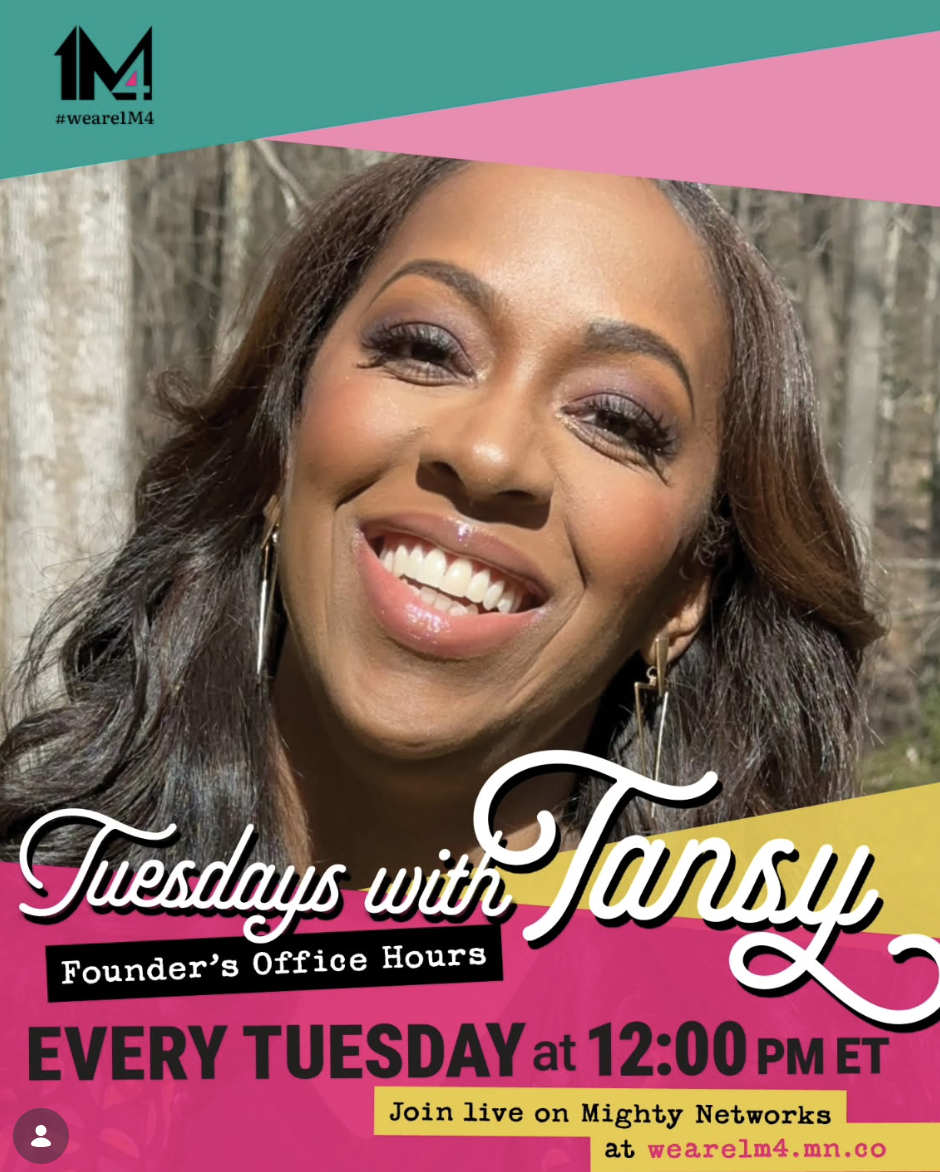
To make sure our community has the tools to stay safe and support each other, our Founder, Tansy, holds weekly office hours to answer questions and walk members through 1M4’s safety resources.
No registration needed. Just join 1M4 via the button below, then hop into our online convos at 12 PM ET every Tuesday.
Got a pressing question? Send an email to info@1m4.org, and we’ll get back to you before the next session.
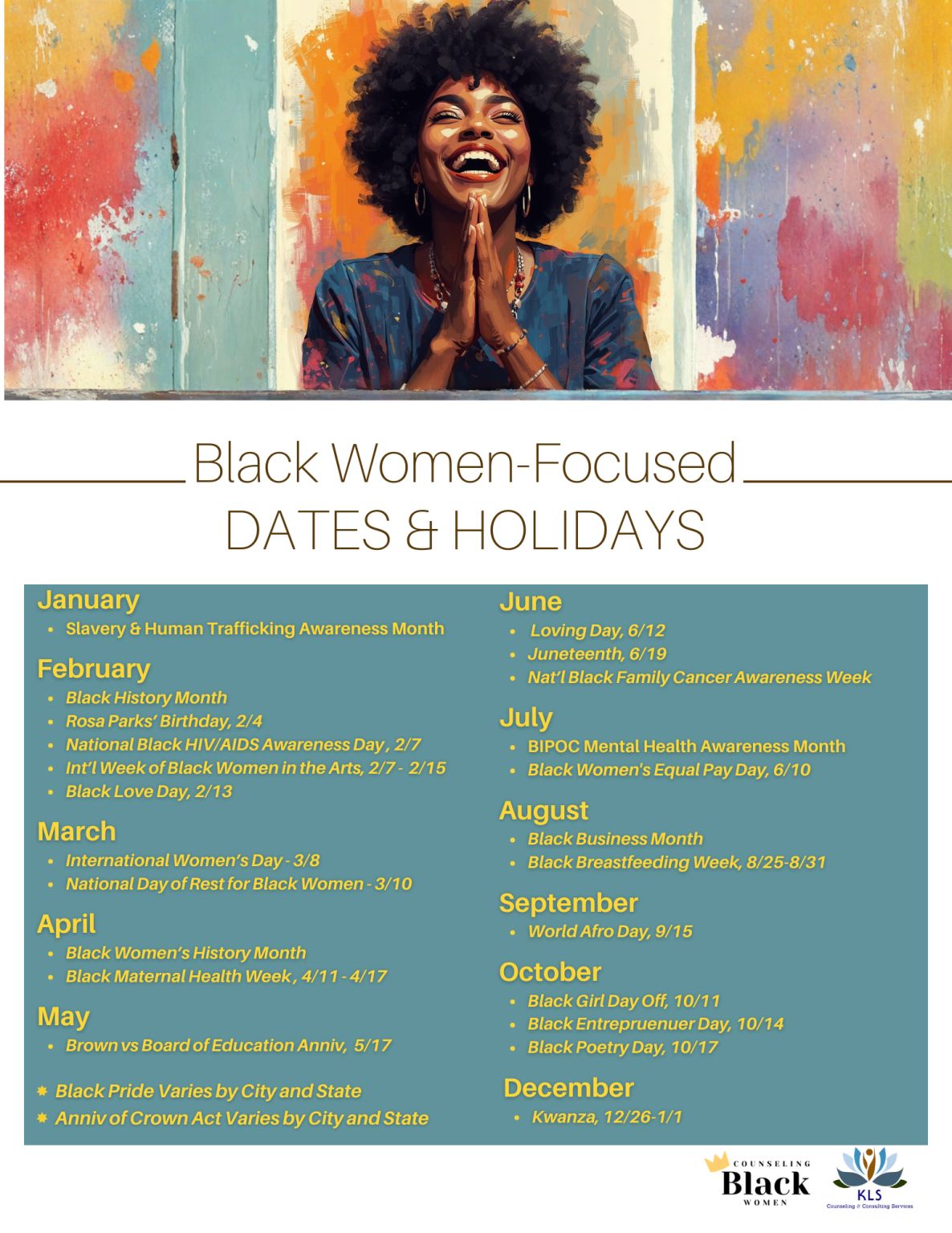
Cheat Sheet for Recognizing Black Women
This guidance is shared by Dr. Kimber Shelton, whose work continues to center the importance of culturally responsive approaches to mental health and well-being for Black women.
Below is a cheat sheet of awareness events and programs tailored for Black women, offering ways to better recognize, support, and center us throughout the year.