“Progress is possible, but it is fragile, and across our country, the battles for our most basic civil rights rage on.” — Stacey Abrams
Safety begins before an emergency.

As the midterm elections approach, conversations about the future of our communities take on renewed importance. Elected officials influence how public resources are allocated, which services receive funding, and where communities invest. Understanding what makes a community safe is part of understanding what is at stake.
Imagine walking home after dark. You reach your block, pass the corner store, and notice a group of neighbors gathered outside. Someone is walking their dog. A child rides their bike along the sidewalk. You recognize a few familiar faces, and the neighborhood feels like a place where you belong.
Now imagine taking the same walk while wondering whether you’ll be harassed, whether help will arrive if something happens, or whether calling for assistance could introduce another kind of danger.
Safety is deeply personal. It shapes how we move through our neighborhoods, where we gather, and whether we feel comfortable asking for help. Yet conversations about public safety often begin only after something has gone wrong.
As we consider the issues that will shape our communities in the years ahead, we have an opportunity to ask a more fundamental question: What does it actually take for people to feel safe where they live?
What if, instead of measuring safety solely by how a community responds to emergencies, we also considered what it takes to prevent harm in the first place?
The conditions that shape safety
Safety does not exist in a vacuum. It is shaped by the environments we inhabit, the resources available to us, and how we are treated by the institutions tasked with protecting us.
The Centers for Disease Control and Prevention takes a public health approach to violence prevention, emphasizing the need to address both immediate risks and underlying conditions, including economic insecurity and limited educational opportunities.
But the conditions that shape safety extend beyond access to resources. They also include how safety is enforced and whether people can trust the institutions responsible for protecting them.
In many Black communities, that trust is complicated by racial profiling and disproportionate policing. For example, in New York City, Stop-and-frisk, which allows officers to stop and, under specific legal conditions, frisk individuals, remains a significant part of law enforcement. And according to the New York Civil Liberties Union’s analysis of NYPD data, 90 percent of people stopped between 2003 and 2024 were people of color.
These disparities affect how people experience the institutions meant to protect them. As a Black parent, safety may also mean worrying that your son could be treated as suspicious simply for going about his day. When seeking help carries the possibility of profiling or mistreatment, trust in public institutions can erode.
Similar concerns arise around immigration enforcement. A 2026 American Civil Liberties Union (ACLU) report examined more than 1,200 immigration enforcement incidents across eight states in 2025, identifying hundreds of incidents involving potential civil rights violations, including racial profiling. Although the findings reflect a sample rather than all enforcement activity, they raise questions about how immigration operations affect the wider communities in which they occur.
These realities complicate the meaning of safety. Building safer communities requires not only preventing violence, but also addressing unequal treatment and ensuring people can seek protection without fear of discrimination.
Building safer communities requires looking beyond enforcement to the circumstances that shape residents’ everyday lives.
Consider a neighborhood where a recreation center has closed, vacant lots remain neglected, and young people have few affordable places to gather after school. These conditions do not inevitably lead to violence, but they can limit access to supportive spaces and opportunities that help communities thrive. They also raise an important question: what investments could help residents feel safer and better supported?
The CDC’s violence prevention framework highlights the importance of strengthening protective environments through strategies that support young people, expand opportunities, and foster safe community spaces.
Who do we turn to when something goes wrong?
A neighborhood’s safety also depends on whether people know where to turn when they need help.
When an emergency arises, many of us have been conditioned to think of one response: call 911. This reflex ultimately means a police response in the majority of calls. There are situations in which police intervention is necessary. But not every urgent situation involves a crime, and not every person in distress needs the same kind of response.
Someone experiencing a behavioral health crisis may need a trained clinician. A person facing homelessness may need outreach workers who can connect them with services. A conflict between neighbors may call for trained mediators who can help de-escalate tensions before anyone gets hurt.
Community-based alternatives to traditional emergency response can help connect people with support that reflects their circumstances. Resources like our Right Response Directory do just that by helping people find care-centered support beyond conventional emergency services.
Knowing what options exist before a crisis occurs can make it easier to find appropriate support when it matters most.
Communities deserve investment, not just intervention
There is another dimension to this conversation: who gets to shape the meaning of safety in the first place?
Residents understand their neighborhoods in ways that outside institutions may not. They know which public spaces feel welcoming, where young people gather, and what resources families need. Their experiences should inform decisions about public safety.
The U.S. Department of Justice’s Community Violence Intervention Implementation Checklist recommends resident engagement, partnerships, and evaluating whether programs meet community needs.
Fostering neighborhood-led initiatives is about giving residents a meaningful role in shaping local priorities and ensuring community organizations have the funding to sustain their work. It also means creating neighborhoods where young people have opportunities to thrive, residents can gather in welcoming spaces, and people facing challenges can access support.
Building safety together
Creating safer neighborhoods is not the responsibility of residents alone. Governments, institutions, community organizations, and local leaders all have a role in addressing the conditions that lead to violence.
With the midterms approaching, questions of public safety are worth carrying into conversations about our communities’ futures. Understanding where candidates stand on violence prevention and neighborhood investment can help us evaluate the choices before us and how they may shape our communities.
Safety means more than the absence of violence. We need the ability to participate in community life without constant fear and knowing that help is accessible when needed.
As we consider the future of public safety, we must look beyond how communities respond when something goes wrong and consider what can be done to prevent harm in the first place.
Your Sistas Through It All,
The Ladies of 1M4
A new book on crisis response
What happens when the system we call for help isn’t designed to meet the crisis in front of us? In 911, What’s Your Emergency? The Promise and Peril of Crisis Response, Dr. Rebecca Neusteter examines the history of America’s 911 system, its racialized roots, and the risks of relying on armed police as the default response to mental health and other emergencies.
Pages 169–170 feature the work of 1M4 and The Right Response as part of a larger conversation about building safer, more equitable approaches to crisis response.
Use code TNP30 for 30% off your order.
Mental health tip

If you haven’t already, check out our 1M4 Black Mental Wellness Resource Guide to connect you with trusted tools and resources to support your mental well-being.
Voter check-in
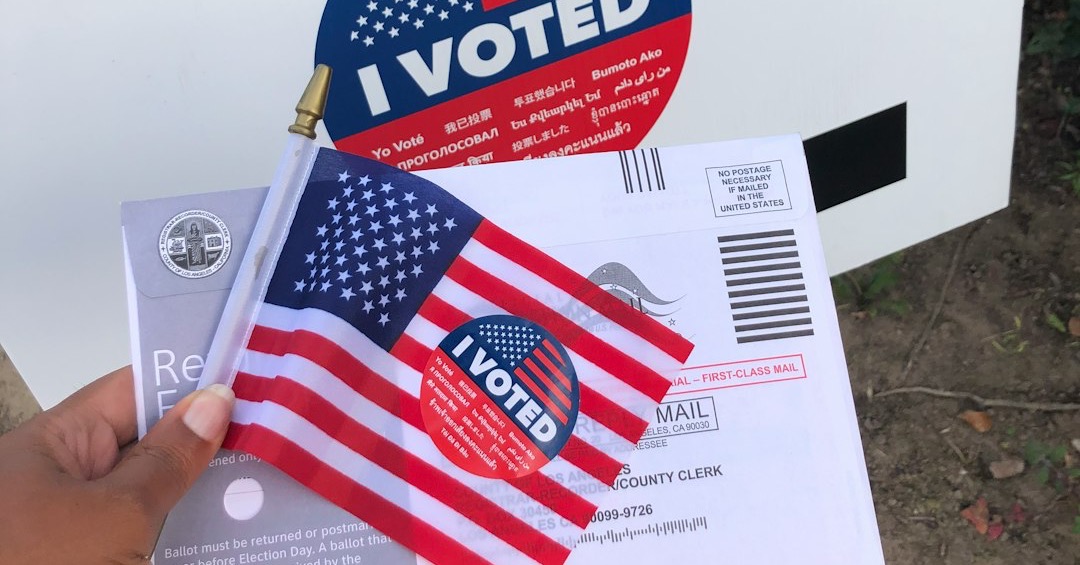
Before Election Day in November, take a few minutes to make sure you’re ready to vote.
-
Check your registration. Make sure your name and address are up to date, especially if you’ve moved recently.
-
Know your options. Look up when and where you can vote, including early voting and mail-in ballot options in your state.
-
Check the requirements. Find out whether you need to bring an ID or other documentation to the polls.
-
Review your ballot. Look over your sample ballot and take some time to learn about the candidates and ballot measures you’ll be voting on.
-
Make a plan. Put your voting date on the calendar and figure out transportation, childcare, work coverage, or anything else you might need ahead of time.
Start with your state or local election office for the most up-to-date information on registration, deadlines, polling locations, and voting requirements.
Upcoming Events & Recaps
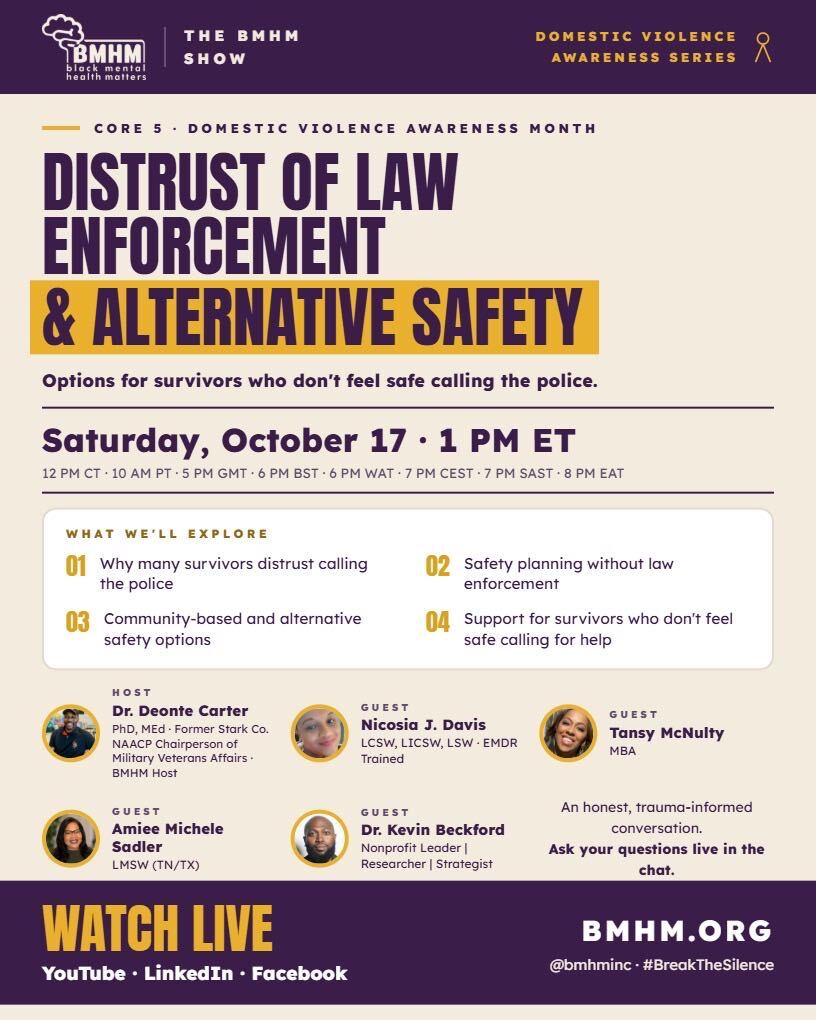
In recognition of Domestic Violence Awareness Month, 1M4 Founder Tansy McNulty joined other community leaders for an important conversation about why many domestic violence survivors distrust law enforcement and how this can affect their safety and access to support.
Save the date 📚
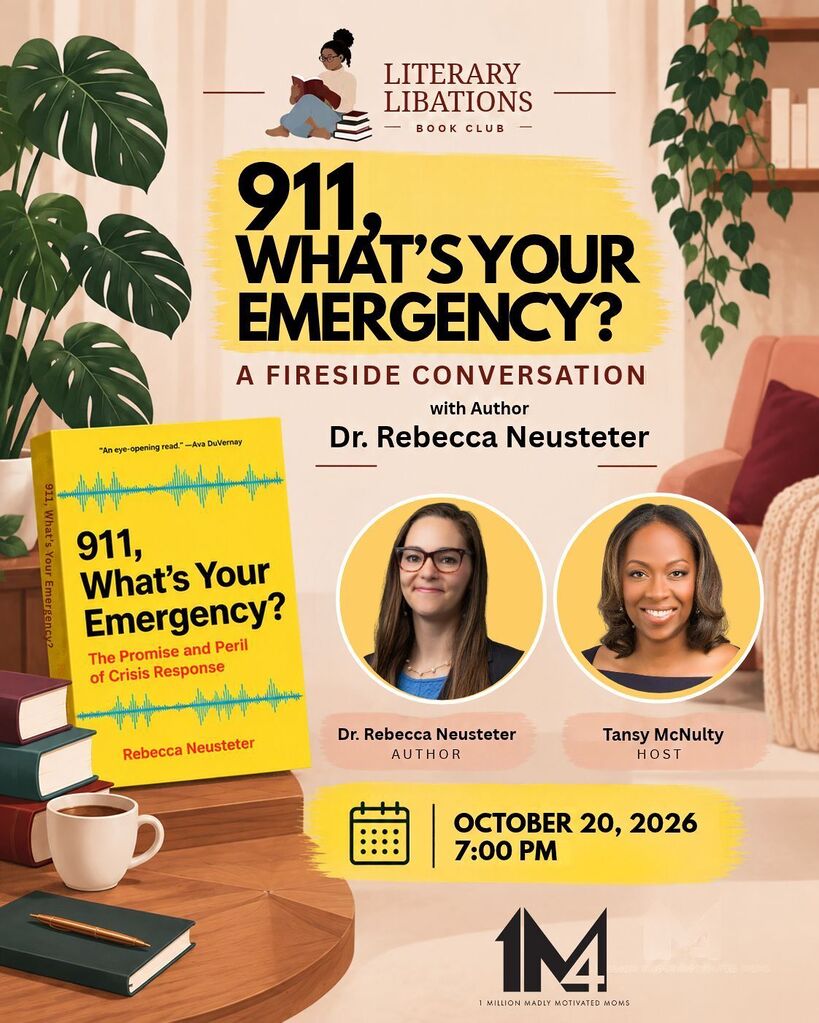
On Tuesday, October 20 at 7 P.M. ET, Tansy McNulty will join Dr. Rebecca Neusteter for a conversation about Dr. Neusteter’s new book on crisis response.
The conversation will be recorded, and we’ll share the replay link soon!

As we focus on bringing our TV series to life, we continue to uplift the work of trusted community partners. On our website, you’ll find upcoming events hosted by these organizations so you can stay connected to the resources, conversations, and support you need.
Cheat Sheet for Recognizing Black Women
This guidance is shared by Dr. Kimber Shelton, whose work continues to center the importance of culturally responsive approaches to mental health and well-being for Black women.
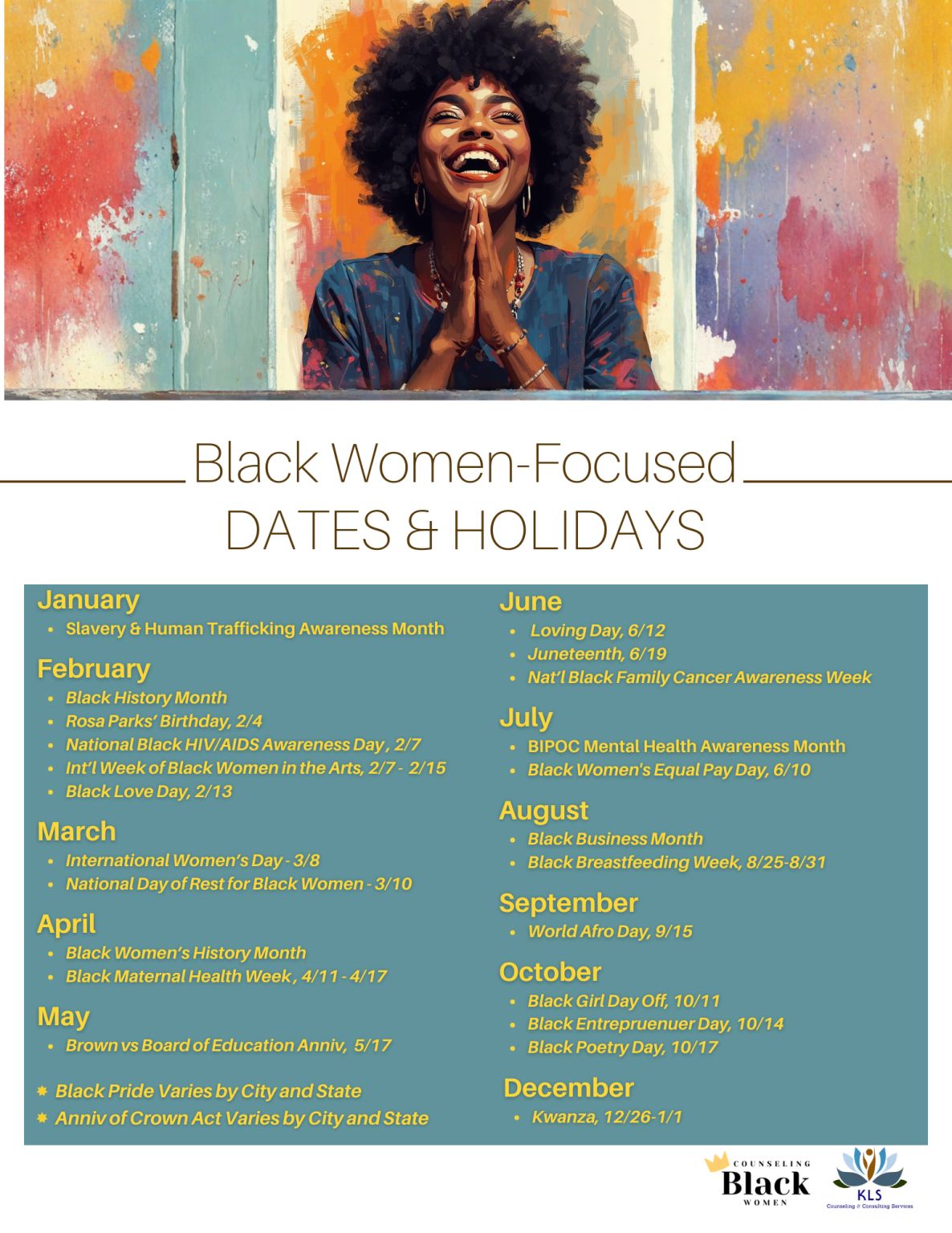
Below is a cheat sheet of awareness events and programs tailored for Black women, offering ways to better recognize, support, and center us throughout the year.