“I could be no happier than giving service to my people.” — Annie Turnbo Malone
Did anyone ever sit you down and explain how a credit score works? Or what a 401(k) actually does? How to negotiate your salary? When to save, when to invest, or what to do when debt starts piling up?
Maybe someone did. Maybe you learned along the way. Or maybe you’re still figuring some of it out.
For a lot of us, money education didn’t come from a textbook. It came from watching our families make things work. We learned to stretch a dollar, save for a rainy day, and work hard. But conversations about investing, building assets, or making our money work for us may have been harder to come by.
And sometimes, there’s a bigger reason for that.
You can’t pass down what you were never given the chance to learn.
Generations of Black families have had less access to the wealth-building opportunities that can make financial knowledge easier to develop and pass down. In 2022, the median wealth of White families was about $285,000, compared with roughly $45,000 for Black families.
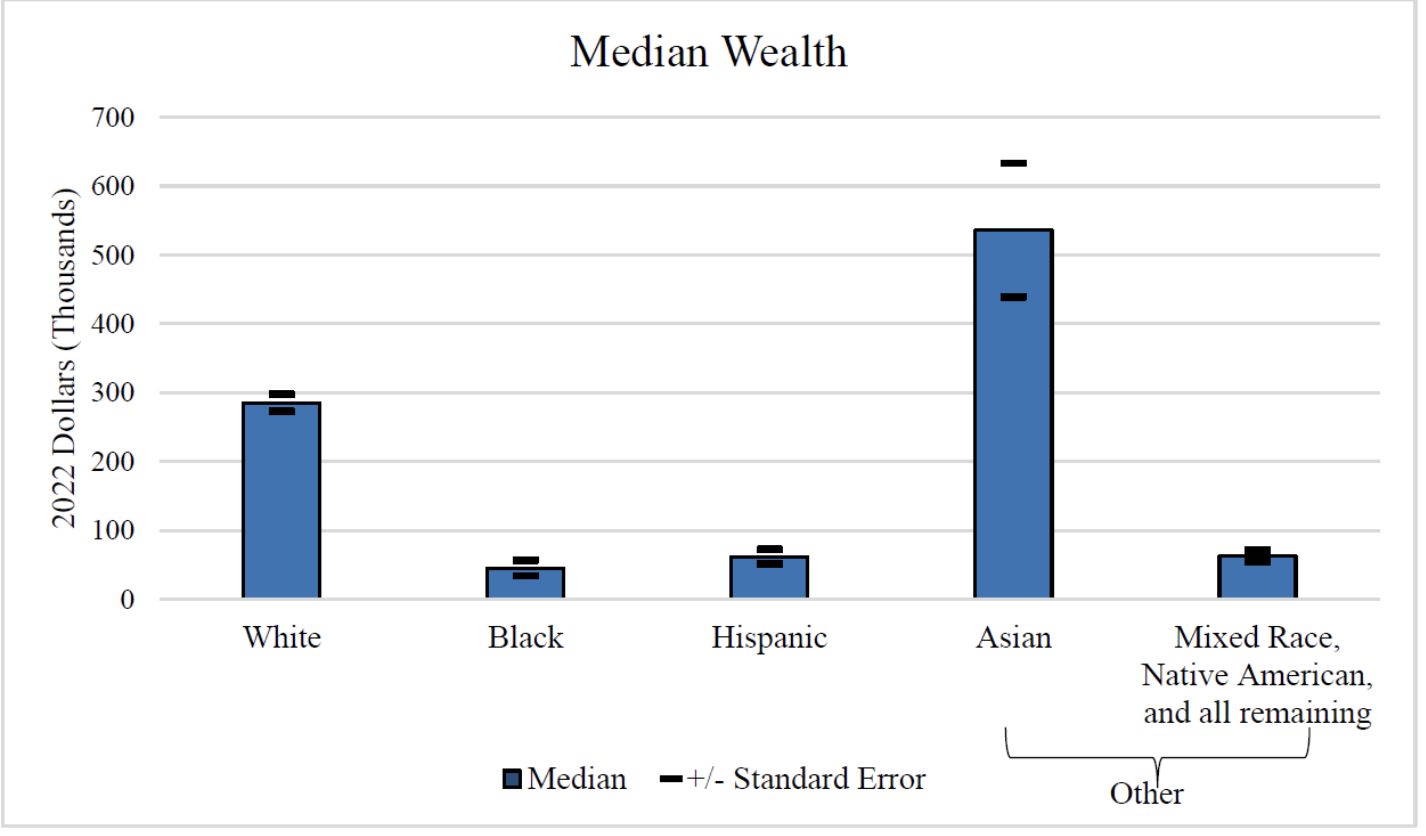
That gap isn’t simply about how well someone budgets or whether they know how to invest. It reflects generations of unequal access to wealth and the resources that help families build it.
And that can affect what gets passed down, too.
Your parents could’ve taught you to save because saving felt safer than investing. It’s also plausible that nobody explained retirement accounts because no one in your family had one. Maybe you learned to prioritize helping family now because there wasn’t much of a financial cushion to begin with.
Sometimes we’re learning how to survive financially before we’re ever taught how to build wealth.
Pew Research Center found that 50% of Black adults say they know a great deal or a fair amount about personal finances, compared with 58% of White adults. Among Americans who feel knowledgeable about personal finances, family and friends are the most commonly cited source of that knowledge.
So what happens when the financial lessons you learned through your family were shaped by a very different economic reality?
You figure it out. You ask questions, make mistakes, learn. And then, hopefully, you teach someone else.
Little by little, you change what gets passed down.
When being “good with money” means carrying everyone
For Black women, that learning can come with another layer: responsibility.
Pew found that 82% of Black adults say being able to provide for their family is essential to their definition of personal success, while 68% say they feel a great deal or fair amount of pressure to be able to provide for their family. Black women are also more likely than Black men to report feeling significant pressure around having enough money, using their talents to help others, and making their family or community proud.
And when Black adults were asked what financial success looks like, being debt-free ranked at the top: 67% said it was essential to their definition of financial success. Black women were more likely than Black men to say being debt-free, passing down financial assets, and retiring early were essential.
There can be pride in being the one who can help. But there can also be exhaustion in feeling like you always have to be the one who has it together.
If you’re the one always sending money home and covering unexpected bills for family and friends…all while trying to secure for your own financial future…you’re not alone. Sometimes called the “Black tax,” this pressure to financially support family can become an ongoing responsibility, making it harder for Black adults to save, invest, and build wealth for themselves and future generations.
Financial wellness can be difficult to prioritize when you’re constantly thinking about who might need you next.
Financial wellness isn’t about having it all figured out

Financial wellness doesn’t mean having a perfect budget or knowing everything about investing.
The Consumer Financial Protection Bureau defines financial well-being in part as having financial security and the freedom to make choices in both the present and the future. That includes being able to manage your day-to-day finances, absorb an unexpected financial shock, work toward your goals, and make choices that allow you to enjoy your life.
This definition leaves a little more room to breathe. Here’s what financial wellness can look like:
-
Finally opening that retirement account you’ve been putting off
-
Getting honest about your debt without shaming yourself
-
Learning what your employer’s retirement match actually means
-
Simply looking at your bank account without immediately closing the app
You don’t have to master everything at once. Start with one thing you want to understand better.
A few places to start
-
Want to understand your financial well-being? The CFPB offers a free Financial Well-Being Scale that can help you take stock of where you are.
-
Ready to learn more about investing? Investor.gov offers beginner-friendly resources on saving, investing, retirement, and understanding risk.
-
Need help with credit or debt? The CFPB has tools and resources covering credit reports, debt, budgeting, savings, and more.
-
Want an approachable introduction to investing? Courtney Hale, an early supporter of 1M4, breaks down stocks and investing in plain language on his YouTube channel.
And if something still doesn’t make sense? Ask a friend or family member. Find a trusted financial professional. Search for an explanation that actually makes sense to you.
There is no shame in learning something you were never taught.
What are we passing down?
We often think of financial legacy as something tangible: a home, a business, a savings account, an inheritance.
But knowledge matters, too.
Knowing how to negotiate can be passed down. So can understanding credit. Talking openly about debt. Teaching a young person what investing means. Showing them that money is something they can learn about, not something they have to be afraid to talk about.
Maybe the goal isn’t simply to make more money.
It could be to build a relationship with money that gives us more freedom, choices, and confidence and then make sure the next generation doesn’t have to learn everything the hard way.
Giving is part of the picture, too
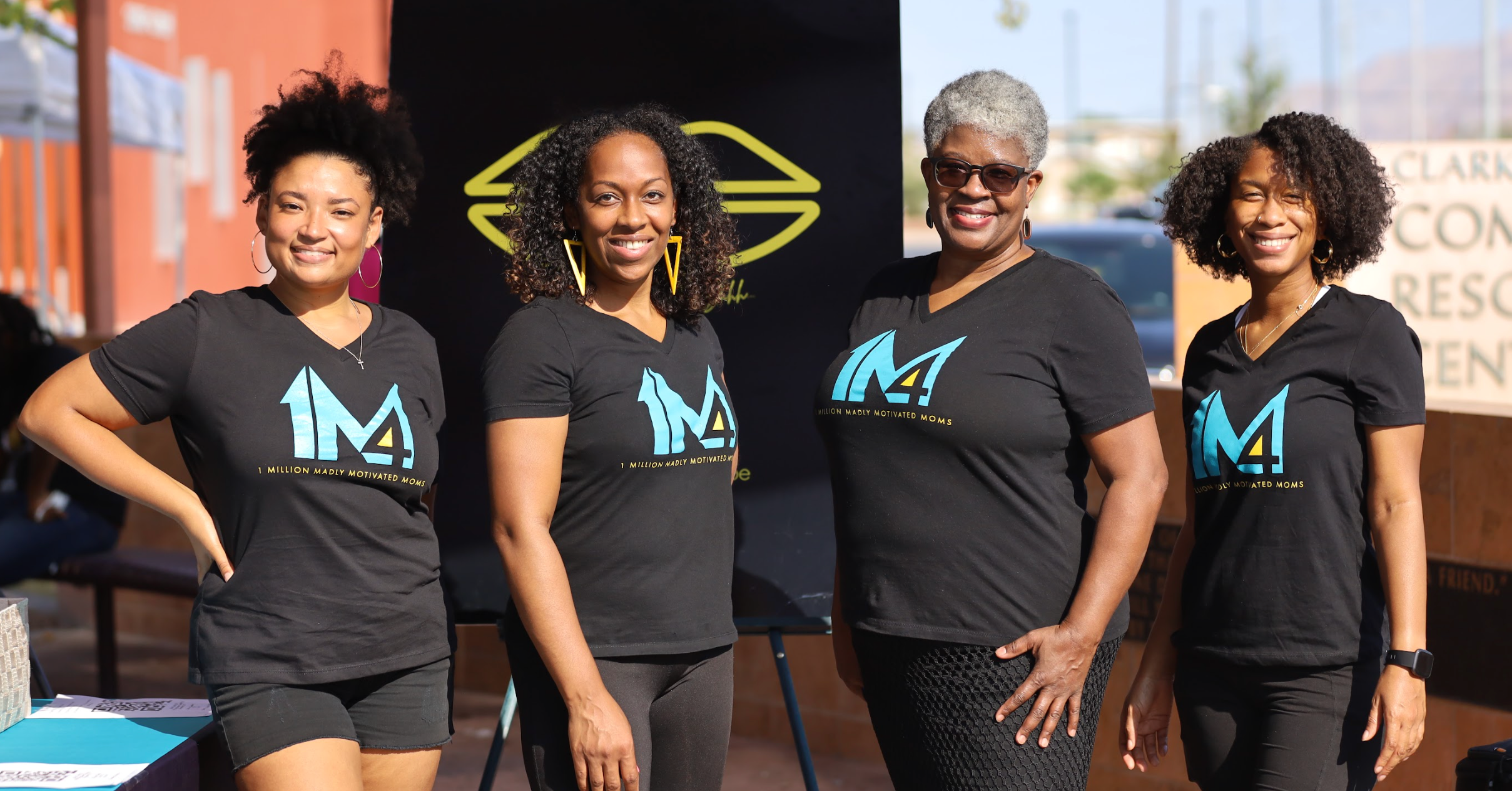
Taking care of our own financial well-being and supporting our communities can exist side by side. In fact, both are part of building healthier communities.
This belief feels especially relevant this month. On August 19, we recognized World Humanitarian Day, an annual observance that honors humanitarian workers around the world who risk their lives to help people affected by conflict, disaster, and other crises. It’s a reminder that caring for one another isn’t always about having the most to give. Sometimes, it’s about using what we have—our time, resources, skills, or voice—to make someone else’s path a little easier.
That spirit of giving runs through Black August and Black Philanthropy Month, too. And there’s still time to give back.
If you weren’t able to donate earlier this month, there’s still time to support 1M4’s efforts. And if you already gave, thank you! We’re excited to share that we exceeded our fundraising goal for the Sunset Walk, and we’re continuing to raise funds through the end of August to sustain this work. Donations made through Givebutter will also help us receive a percentage match, making your support go even further.
We hope you’ll find a way to give that feels meaningful to you. That might mean making a donation, supporting a Black-owned business, sharing a resource, or simply passing along something you’ve learned.
Because building a healthier future isn’t only about what we accumulate. It’s also about what we make possible for the people coming after us.
Let us know in the comments who taught you about money, and what you want to teach the next person. We’d love to hear from you!
Your Sistas Through It All,
The Ladies of 1M4
Watch the recap of our inaugural Sunset Walk ⬇️

A mental health tip for you

Sis, try the “orienting” exercise when you feel stressed, anxious, or disconnected. Orienting helps remind your nervous system that you’re in the present moment.
Take a slow look around the room and notice something that feels pleasant or neutral—a color you like, sunlight through the window, a familiar object. Let your eyes rest there for a few seconds, then take a slow breath.
You’re not forcing yourself to feel better. You’re simply giving your body a chance to notice: I’m here, right now.
Upcoming Events
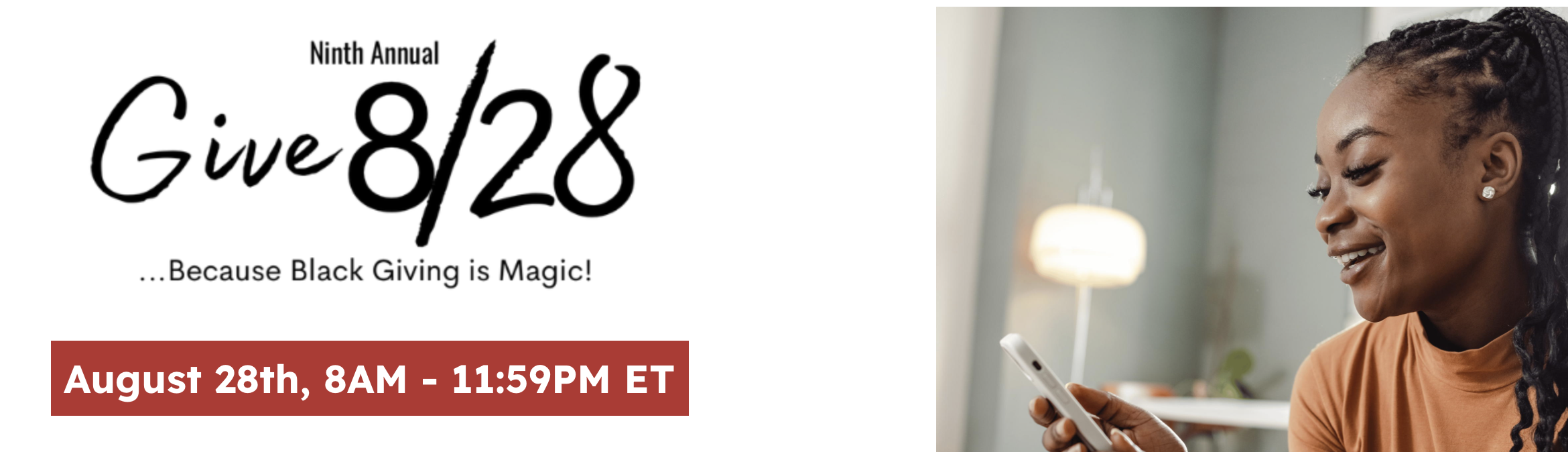
Give 8/28 is a national day of giving that celebrates the impact of Black-led and Black-benefiting nonprofits. The campaign makes it easy to discover organizations creating change across the country and support the causes that matter most to you.
This August 28, we encourage you to make a gift to 1M4, then explore the many other nonprofits participating in Give 8/28. Find a cause that resonates with you and consider donating. Every gift, no matter the size, helps strengthen communities and advances the spirit of collective giving.
As we focus on bringing our TV series to life, we continue to uplift the work of trusted community partners. On our website, you’ll find upcoming events hosted by these organizations so you can stay connected to the resources, conversations, and support you need.
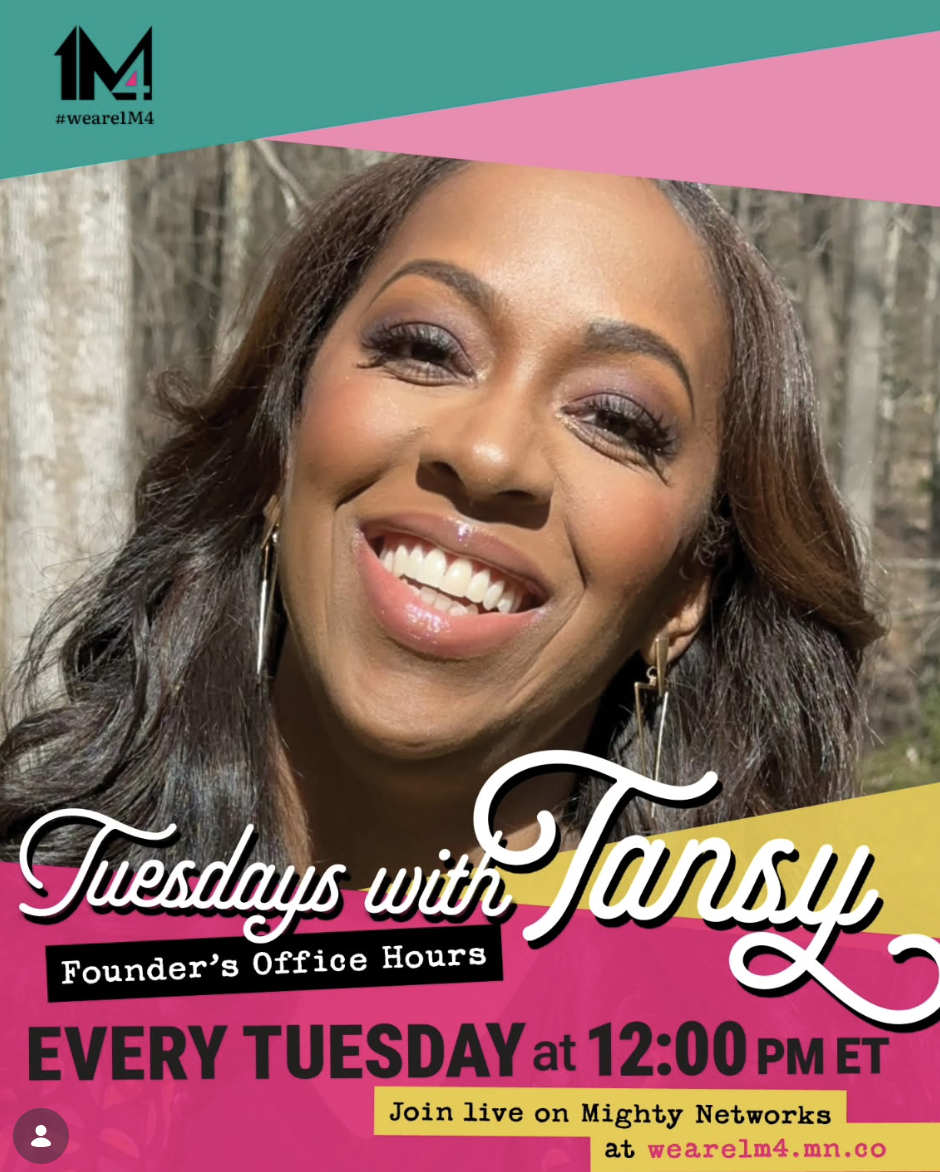
To make sure our community has the tools to stay safe and support each other, our Founder, Tansy, holds weekly office hours to answer questions and walk members through 1M4’s safety resources.
No registration needed. Just join 1M4 via the button below, then hop into our online convos at 12 PM ET every Tuesday.
Got a pressing question? Send an email to info@1m4.org, and we’ll get back to you before the next session.
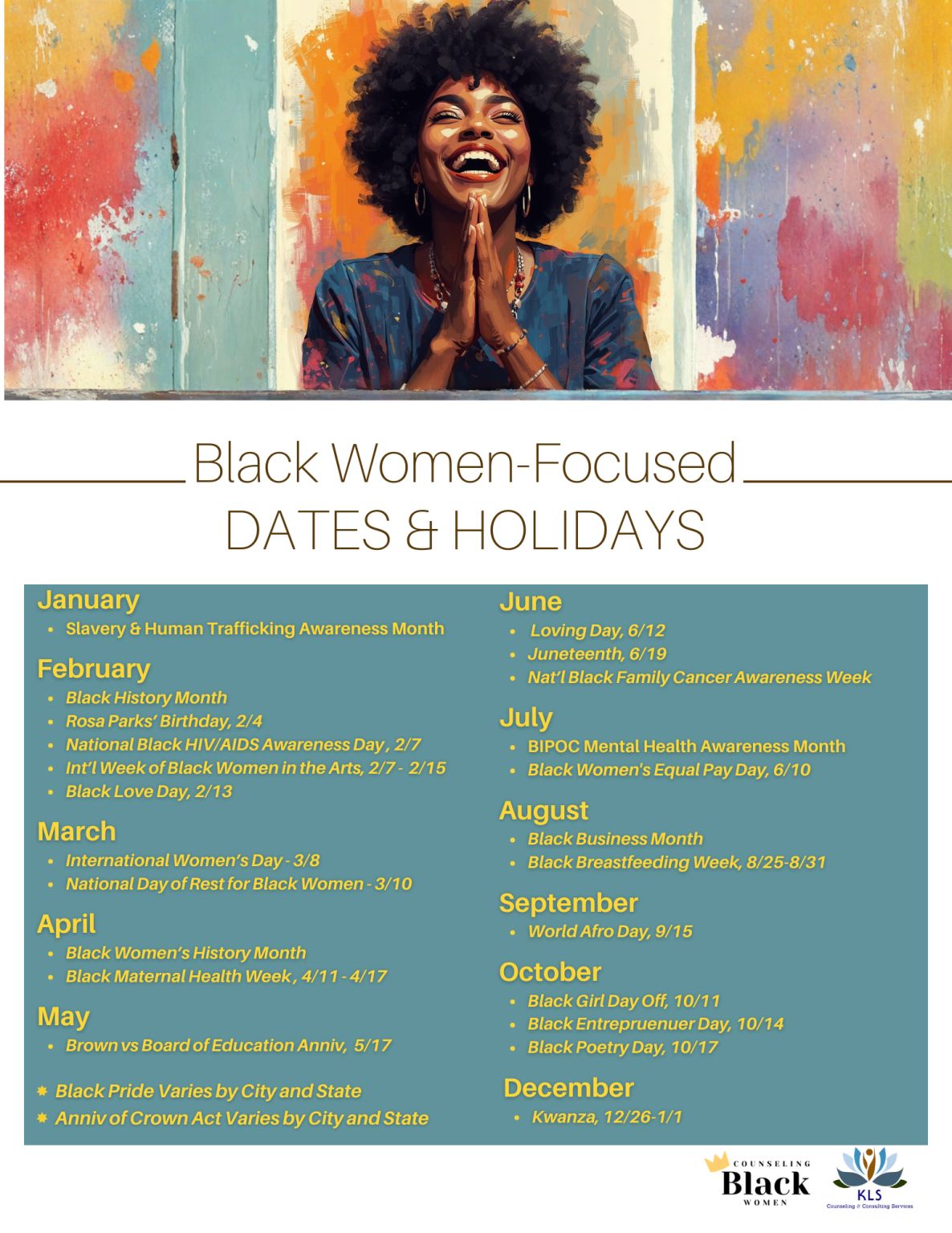
Cheat Sheet for Recognizing Black Women
This guidance is shared by Dr. Kimber Shelton, whose work continues to center the importance of culturally responsive approaches to mental health and well-being for Black women.
Below is a cheat sheet of awareness events and programs tailored for Black women, offering ways to better recognize, support, and center us throughout the year.