“If I have someone who believes in me, I can move mountains.”
— Diana Ross
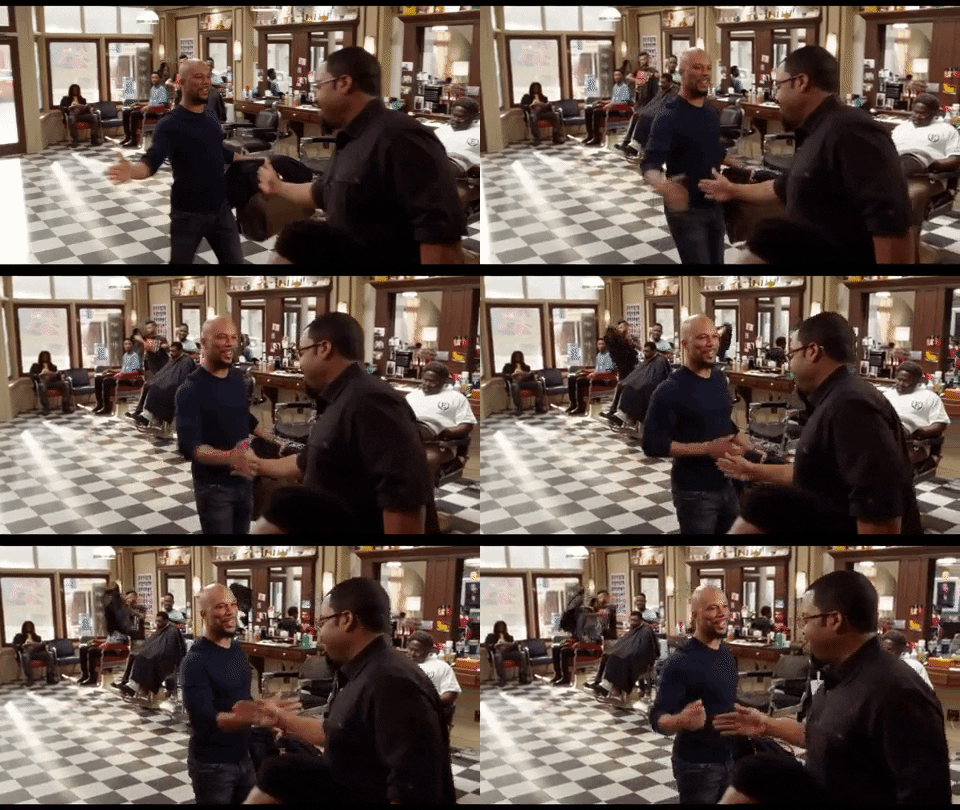
We need our libraries, parks, community centers, barbershops, and other gathering places to thrive.
Summer vacation here, and millions of families are adjusting to a quieter rhythm. No early morning drop-offs, after-school pickups, or built-in structure for the day.
And for many households, that shift raises a familiar question: Where do people actually go to connect when school isn’t in session?
The answer is often something we don’t name enough, even though it shapes daily life: third spaces.
Sociologist Ray Oldenburg used the term to describe the places that exist outside of home, work, or school—spaces where people gather without a transaction or requirement. Not because they have to be there, but because they want to be.
Libraries, parks, recreation centers, community gardens, faith communities, barbershops, salons, and local neighborhood spots all fall into this category. They are not defined by productivity but by presence.
And that distinction matters more than it might seem because third spaces are where community becomes real. Click on the video below to hear more from Tansy on why these spaces matter.
When community had more places to happen
Churches became organizing spaces during the Civil Rights Movement. Barbershops and beauty salons became places where news was shared, ideas were debated, and political awareness was passed between generations. Community centers and neighborhood programs filled gaps in education, mentorship, and support.
They were where people found information that wasn’t always available elsewhere. Where young people met mentors and where families accessed informal support networks.
And while the form of these spaces has changed over time, their role has not disappeared. If anything, it has become more important as other parts of civic life have weakened.
The slow disappearance of shared space
Public libraries have faced ongoing funding pressures. Youth programs and recreation centers in many cities operate with limited staffing or reduced hours. Affordable gathering places have become harder to sustain as costs rise.
At the same time, more social life has moved online, changing how people interact and often reducing the frequency of in-person connection.
Researchers and public health experts have also documented a broader rise in loneliness and social isolation across the United States. In 2023, U.S. Surgeon General Advisory on Social Connection identified social disconnection as a major public health concern, noting its impact on mental and physical health, as well as its broader implications for community well-being.
What’s often missing in this conversation is a simple but important point: Isolation is not only about individual behavior. It is also shaped by infrastructure.
When there are fewer places designed for people to gather naturally, there are fewer chances for connection to happen at all.
Why this matters for Black communities
These spaces have historically functioned as informal support systems. They are where people check in on each other without needing an appointment. Where elders notice when something feels off. Where young people are known by name, not just by record.
They also serve as cultural anchors. Places where identity is affirmed rather than questioned, and where history is remembered and passed on through conversation, storytelling, and shared experience.
When these spaces weaken or disappear, something subtle but important shifts: the density of everyday care begins to thin.
And that affects how communities function long before any formal system is involved.
Summer makes the gap more visible
When school is in session, children have access to structure, routine, peers, and trusted adults. They have places to be during the day and consistent contact with supportive environments.
When school ends, that structure disappears.
For many families, summer programs, libraries, parks, and community centers help bridge the gap. They offer safe places for young people to spend time, learn, and stay connected. They also give working parents some relief and give children continued access to social interaction and enrichment.
But access is not equal. Some communities have well-funded programs with extended hours and diverse offerings. Others have limited or overstretched resources. In those places, young people may spend more time at home or in unsupervised environments, not because anyone chose it that way, but because there are fewer alternatives available.
This isn’t framed as a crisis in most policy discussions, but its effects show up in many parts of community life—from youth development to mental health to how people experience safety in shared spaces.
Connection as public safety infrastructure
But crises rarely begin at the moment they become visible. They develop over time in environments where people feel disconnected, unsupported, or unseen.
That’s why third spaces matter in ways that go beyond social life. They are part of the conditions that shape safety itself.
When people have consistent places to gather, they are more likely to build relationships that can carry them through difficult moments.
None of this replaces formal systems. But it strengthens everything around them. And in many cases, it reduces the distance between a challenge and support.
What we choose to invest in
We know what these spaces make possible. We know what communities gain when they exist: stronger relationships, more connected young people, and environments where people are more likely to look out for one another.
The question is not whether they matter. It’s whether we are willing to invest in them as if they do.
Your Sistas Through It All,
The Ladies of 1M4
A mental health tip for you
As we continue celebrating Black Music Month, here’s a simple, practical tool: use music to regulate your nervous system.
Slower-tempo music (around 60–80 BPM) can help bring your heart rate down and support calm. More upbeat tracks (90–120+ BPM) can help increase energy and focus. Instrumental or low-lyric music is often easier to use when you’re feeling overwhelmed.
Try matching the music to what your body needs in the moment. Slow it down when you’re anxious, speed it up when you’re stuck or low-energy.
Spread Some Blessings!
The consequences of police violence extend far beyond the loss of life. For families affected, it’s the loss of income, the sacrifice of basic necessities, and the start of a high-cost legal fight. If you have the capacity, consider donating to 1M4. Proceeds help support impacted families and sustain the work of 1M4 toward ending police violence for good.


This summer, 1M4 is hosting a series of Sunset Walks across multiple cities as part of our fundraising campaign.
Each walk, taking place in cities including Nashville, Northern Virginia, Jackson, Charlotte, Detroit, and Atlanta, will bring together community members for an evening of connection and collective action.
Together, we’re raising funds to support 1M4’s ongoing work building tools, advocacy, and support systems that advance care-centered crisis response across the country.
More details, city-specific info, and links coming soon! Mark your calendars for August 15th.
As we focus on bringing our TV series to life, we continue to uplift the work of trusted community partners. On our website, you’ll find upcoming events hosted by these organizations so you can stay connected to the resources, conversations, and support you need.
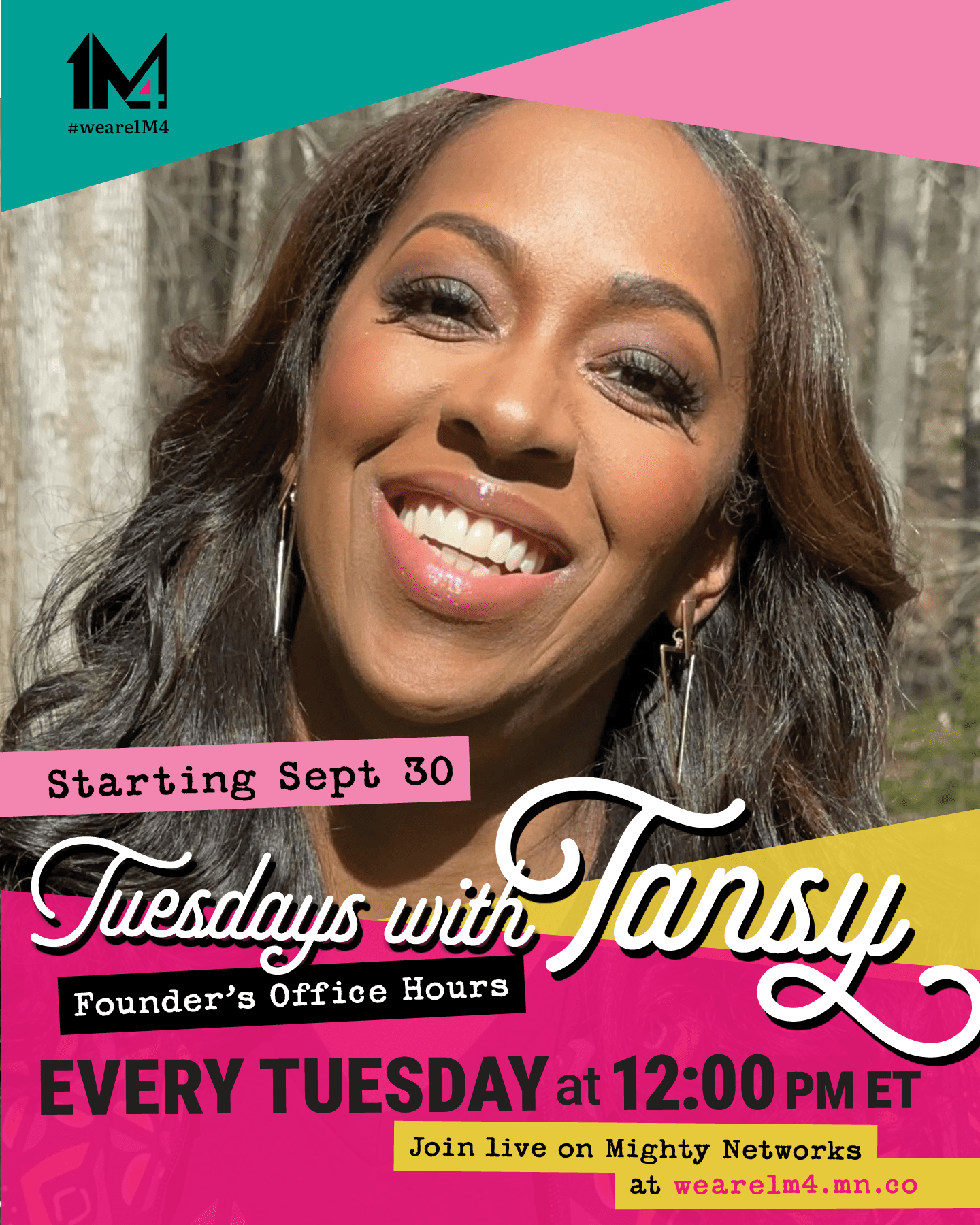
To make sure our community has the tools to stay safe and support each other, our Founder, Tansy, holds weekly office hours to answer questions and walk members through 1M4’s safety resources.
No registration needed. Just join 1M4 via the button below, then hop into our online convos at 12 PM ET every Tuesday.
Got a pressing question? Send an email to info@1m4.org, and we’ll get back to you before the next session.
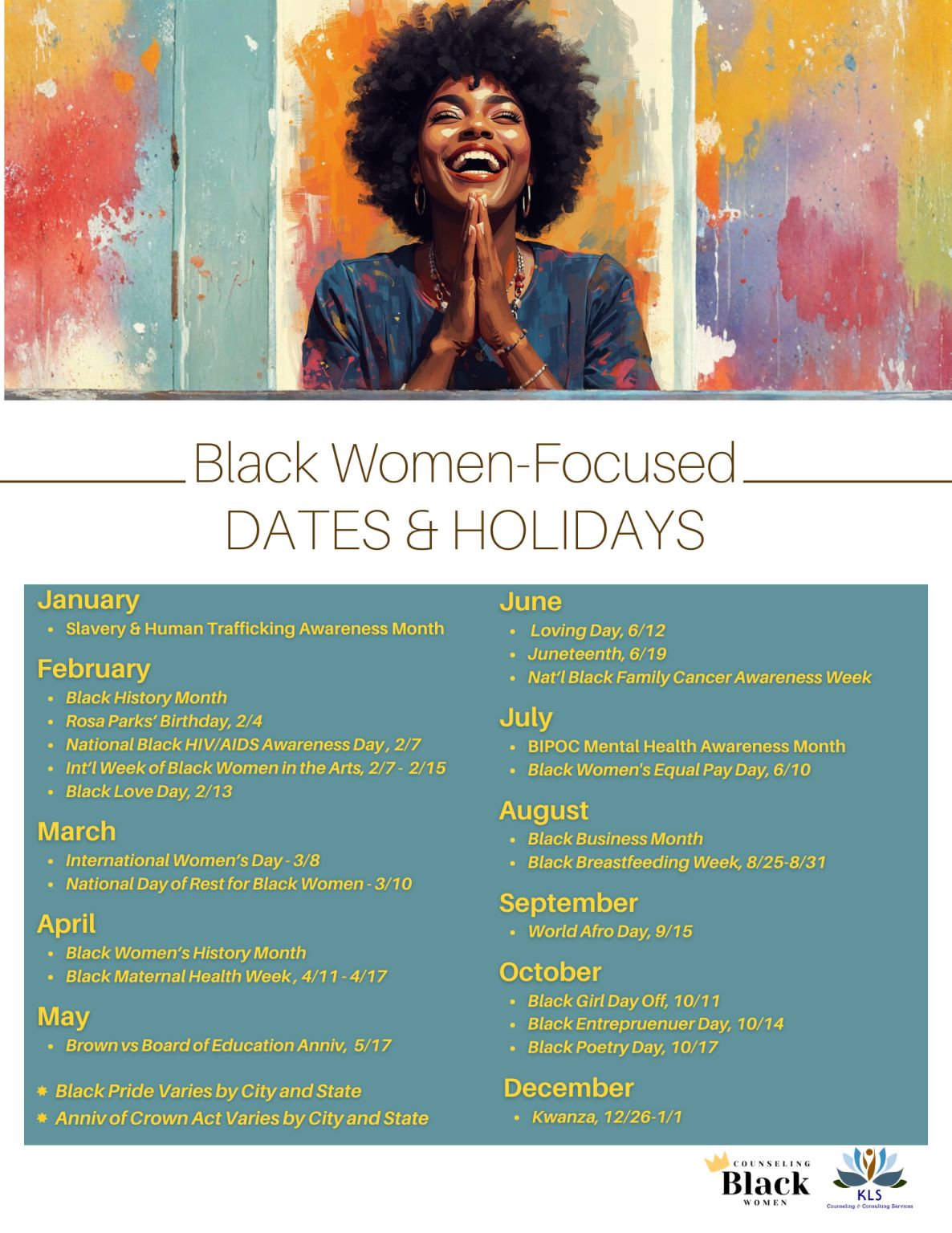
Cheat Sheet for Recognizing Black Women
This guidance is shared by Dr. Kimber Shelton, whose work continues to center the importance of culturally responsive approaches to mental health and well-being for Black women.
Below is a cheat sheet of awareness events and programs tailored for Black women, offering ways to better recognize, support, and center us throughout the year.
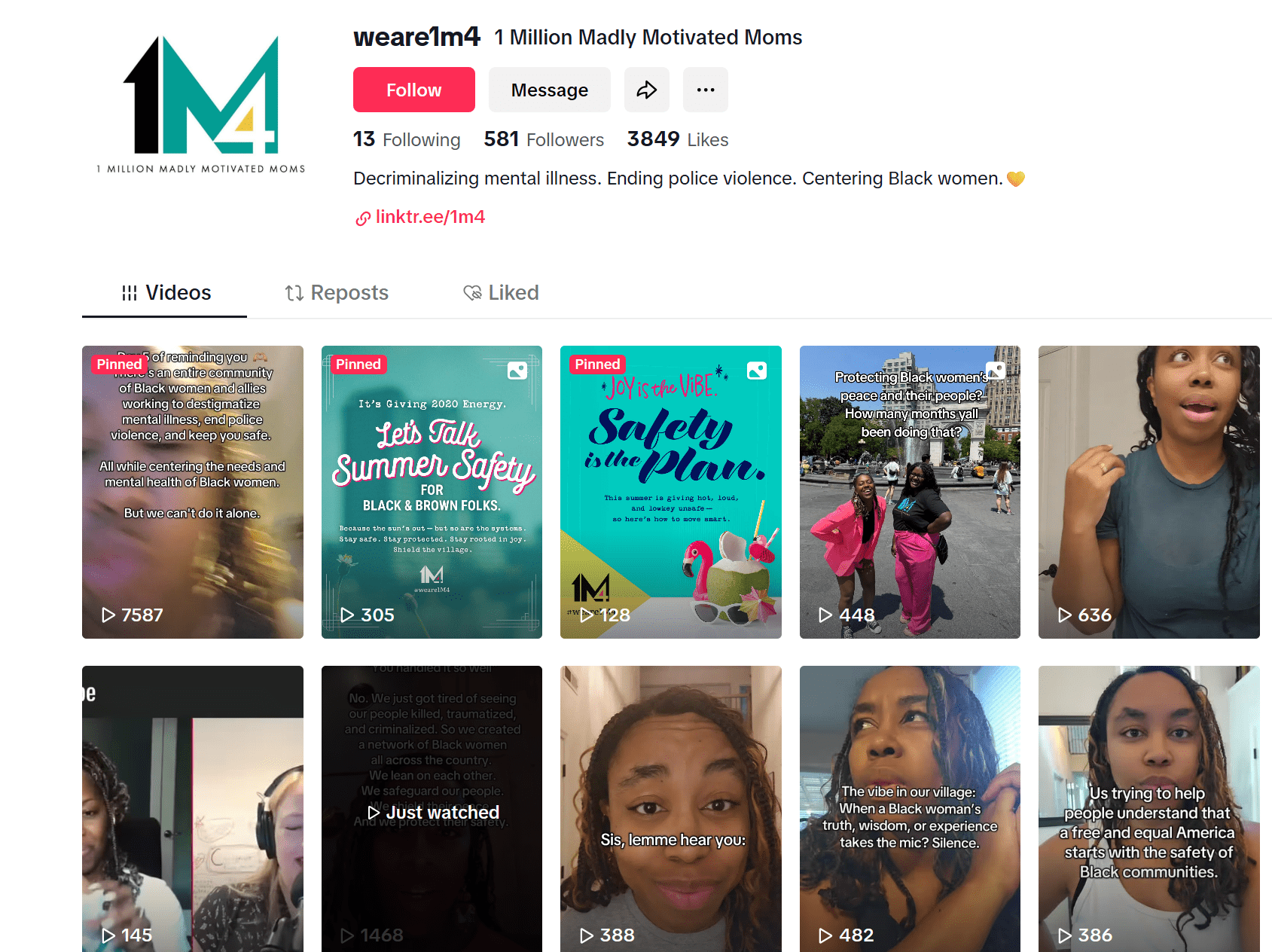
Ok so… we’re on TikTok now! Follow, engage, and rep 1M4 over there. We’re doing our best to reach the people.
Help some Sistas out!


You Got Your 1M4 Merch Yet?
Visit the 1M4 merch store to make sure you’re representing at court support, protests, or in line at your favorite coffee spot. We want to see YOU in your 1M4 gear. Every purchase goes directly to funding the work of 1M4 increasing access to safety and wellness.