“Everyone does not know how to treat or relate to you and it is your job to teach them or not, if that’s what you so desire. That is the magic of boundaries. You get to set them.”
— Elena Simpkins, PHD
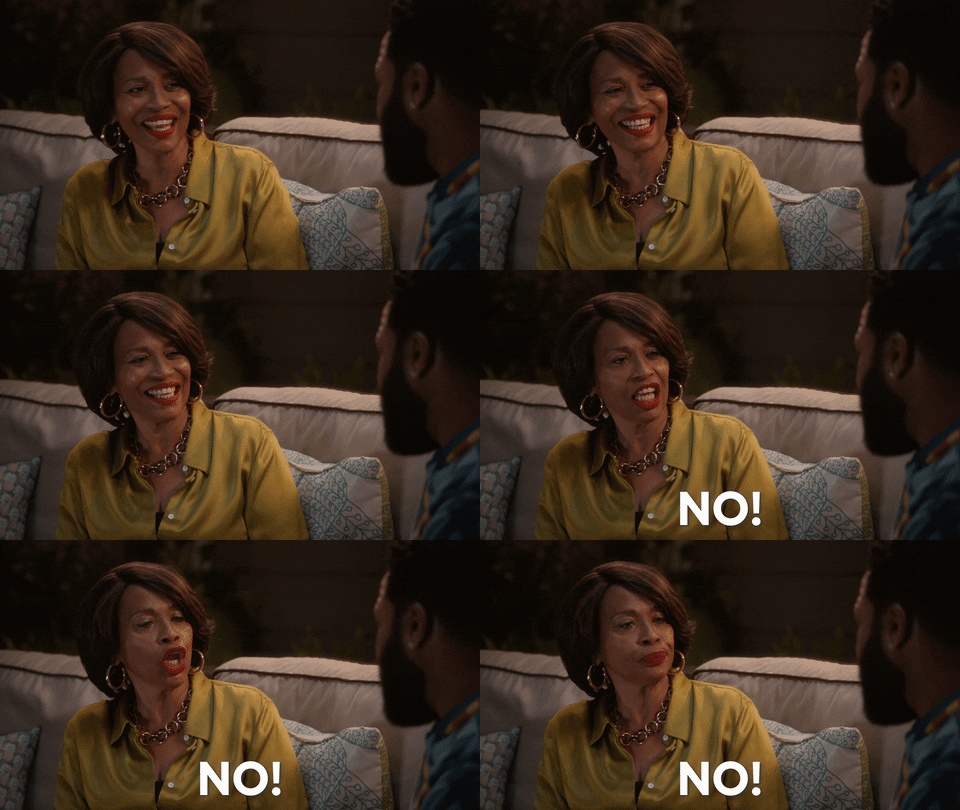
Let’s talk about the moment after you say “no.”
Not the actual “no”….that part may or may not be easy. It’s the mental spiral afterward.
Did I sound rude? Should I have explained more? Are they upset? Should I just do it anyway?
For many Black women, setting boundaries can come with a side of guilt we didn’t ask for.
That’s because saying no isn’t always just saying no. Sometimes it feels like you’re saying no to family or tradition. No to the role you’ve always played as the dependable one. The one who figures it out, shows up, and supports everyone no matter what.
And let’s be honest, many of us grew up watching women in our families do exactly that.
Our grandmothers, mothers, aunties, and sisters often carried the weight of entire households, communities, and generations. Their strength was powerful. Their ability to make something out of nothing was extraordinary.
But what we inherited wasn’t just resilience. We inherited the belief that being needed meant being valuable.
That’s where boundaries get complicated. A lot of times, the hardest part isn’t the conversation. It’s accepting that you are allowed to have one.
Many of us were raised with an unspoken rule: if you can help, you should help. If you have the answer, share it. If you have the energy, give it.
The problem is being capable does not mean you are constantly available.
The truth is: boundaries are not about becoming cold or abandoning your people. They’re about creating healthier ways to show up, without feeling like you have to write a whole essay to justify your needs.
Sometimes that looks like taking a minute before answering a request instead of immediately saying yes. It also means letting someone be disappointed without rushing to fix their feelings.
That last one? Whew. That’s a hard one, especially for women who have spent years managing everyone else’s emotions.
There might also be moments when people will not immediately love your boundaries. Not because your boundary is wrong, but because they’re used to having unlimited access to you.
The first time you stop answering every call, saying yes to every favor, or explaining every decision, it may feel unfamiliar….to you and to them. Growth can be awkward like that.
But someone else’s discomfort does not always mean you’ve done something wrong. A boundary can be loving, respectful, and actually help relationships last because resentment doesn’t get the chance to build quietly in the background.
Community is one of our greatest strengths, and we can honor that by taking care of ourselves. The goal isn’t to become the person who says “no” to everything. (Your folks would probably have questions, and honestly, so would the group chat.)
The goal is to become the person who can say “yes” from a place of choice instead of obligation.
And if saying no in the moment feels impossible, that’s okay. You can always pause and say something like:
-
“Let me check my schedule and get back to you.”
-
“I’m not able to answer right now, but I’ll let you know.”
-
“I need to think about that before I commit.”
That little pause can be everything. It gives you space to decide whether you actually want to say yes, or whether you’re just trying to avoid guilt.
And if face-to-face feels too hard? Text it. Email it. Voice note it if that’s your thing. There is no award for delivering a boundary in person while your nervous system is doing cartwheels.
Try keeping a few responses in your back pocket:
-
“I can’t make it, but I hope it goes well.”
-
“I’m not available for that but thank you for thinking of me.”
-
“I have to pass this time.”
-
“That doesn’t work for me.”
-
“I can’t take this on right now.”
Notice how none of those require a TED Talk. You do not need to over-explain, over-apologize, or build a whole courtroom case for why your no is valid.
A clear no is still a kind no.
This month, try asking yourself:
“Am I saying yes because I want to, or am I afraid of what happens if I don’t?”
That question can reveal a lot. Protecting your peace doesn’t mean you stop loving people. It means you start including yourself in that love.
Your Sistas Through It All,
The Ladies of 1M4
Join the conversation
A mental health tip for you

Photo by Graca Assane on Unsplash
That water will do you good, Sis! Research on “blue spaces” suggests that spending time around water, whether it’s a beach, pool, lake, or even sitting near a fountain, can support relaxation and improve mood.
Consider this your reminder to make time for a little water therapy this summer. And don’t forget the sunscreen! ☀
Spread Some Blessings!
The consequences of police violence extend far beyond the loss of life. For families affected, it’s the loss of income, the sacrifice of basic necessities, and the start of a high-cost legal fight. If you have the capacity, consider donating to 1M4. Proceeds help support impacted families and sustain the work of 1M4 toward ending police violence for good.


Join us for the inaugural 1M4 Sunset Walk Fundraiser on Saturday, August 15! This will be a nationwide evening of connection, movement, and community in support of mental wellness, community care, and safer futures.
Hosted walks will take place in Atlanta, GA, Jackson, MS, Nashville, TN, Osceola, AR, Stallings, NC, and Woodbridge, VA, with a virtual option available for those walking in their own communities.
Registration is free, and donations are encouraged to support 1M4’s work advancing care-centered crisis response and safer communities.
As we focus on bringing our TV series to life, we continue to uplift the work of trusted community partners. On our website, you’ll find upcoming events hosted by these organizations so you can stay connected to the resources, conversations, and support you need.
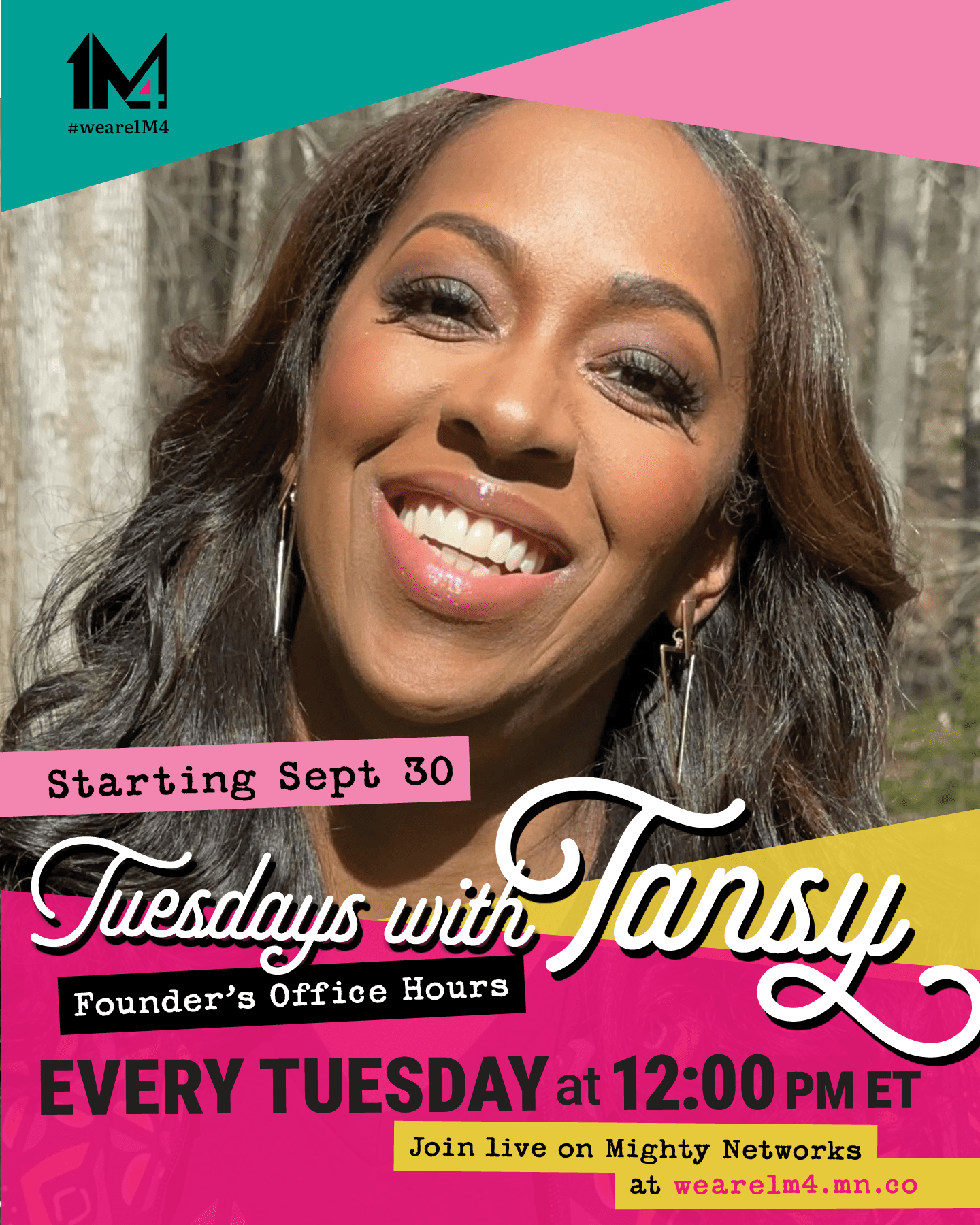
To make sure our community has the tools to stay safe and support each other, our Founder, Tansy, holds weekly office hours to answer questions and walk members through 1M4’s safety resources.
No registration needed. Just join 1M4 via the button below, then hop into our online convos at 12 PM ET every Tuesday.
Got a pressing question? Send an email to info@1m4.org, and we’ll get back to you before the next session.
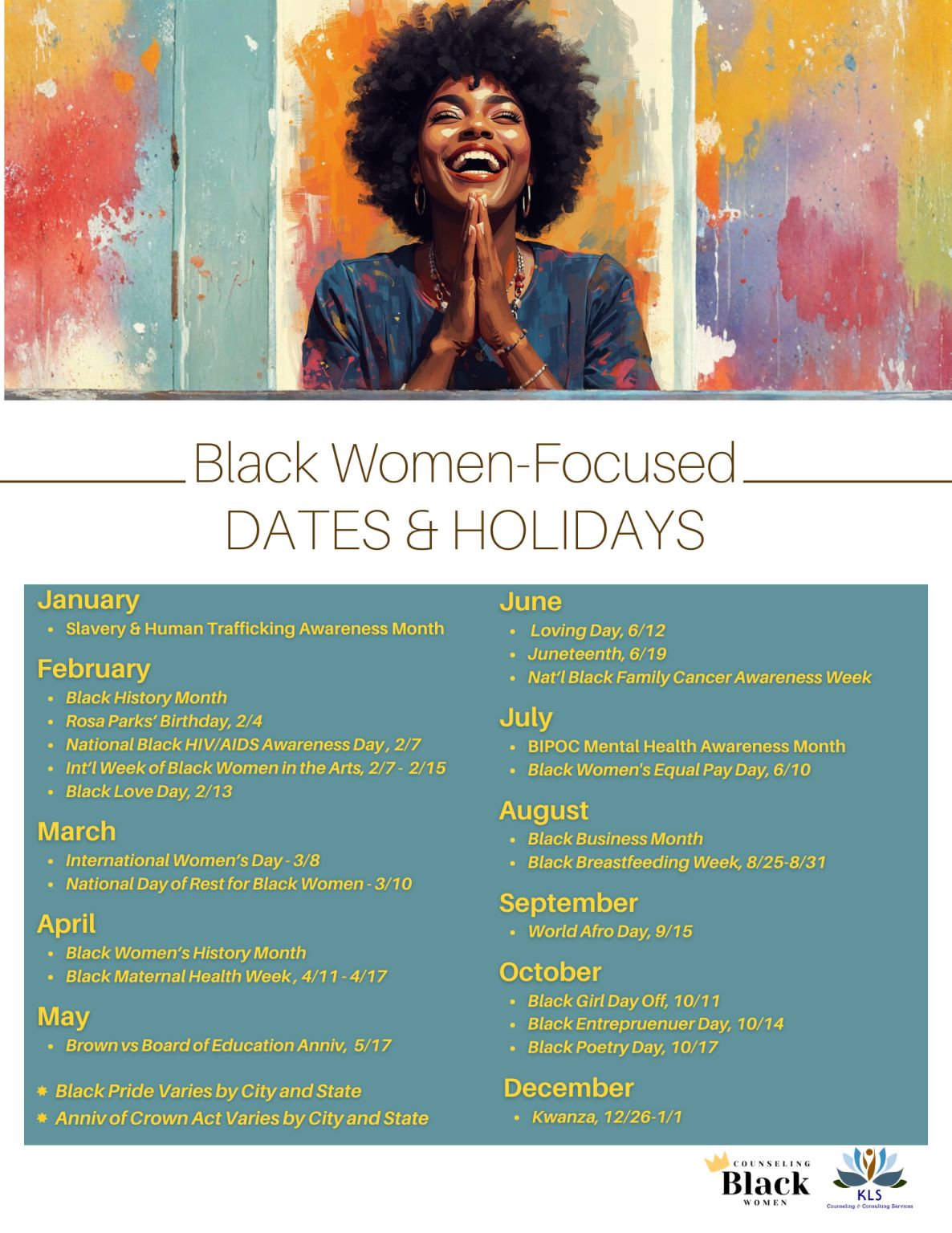
Cheat Sheet for Recognizing Black Women
This guidance is shared by Dr. Kimber Shelton, whose work continues to center the importance of culturally responsive approaches to mental health and well-being for Black women.
Below is a cheat sheet of awareness events and programs tailored for Black women, offering ways to better recognize, support, and center us throughout the year.
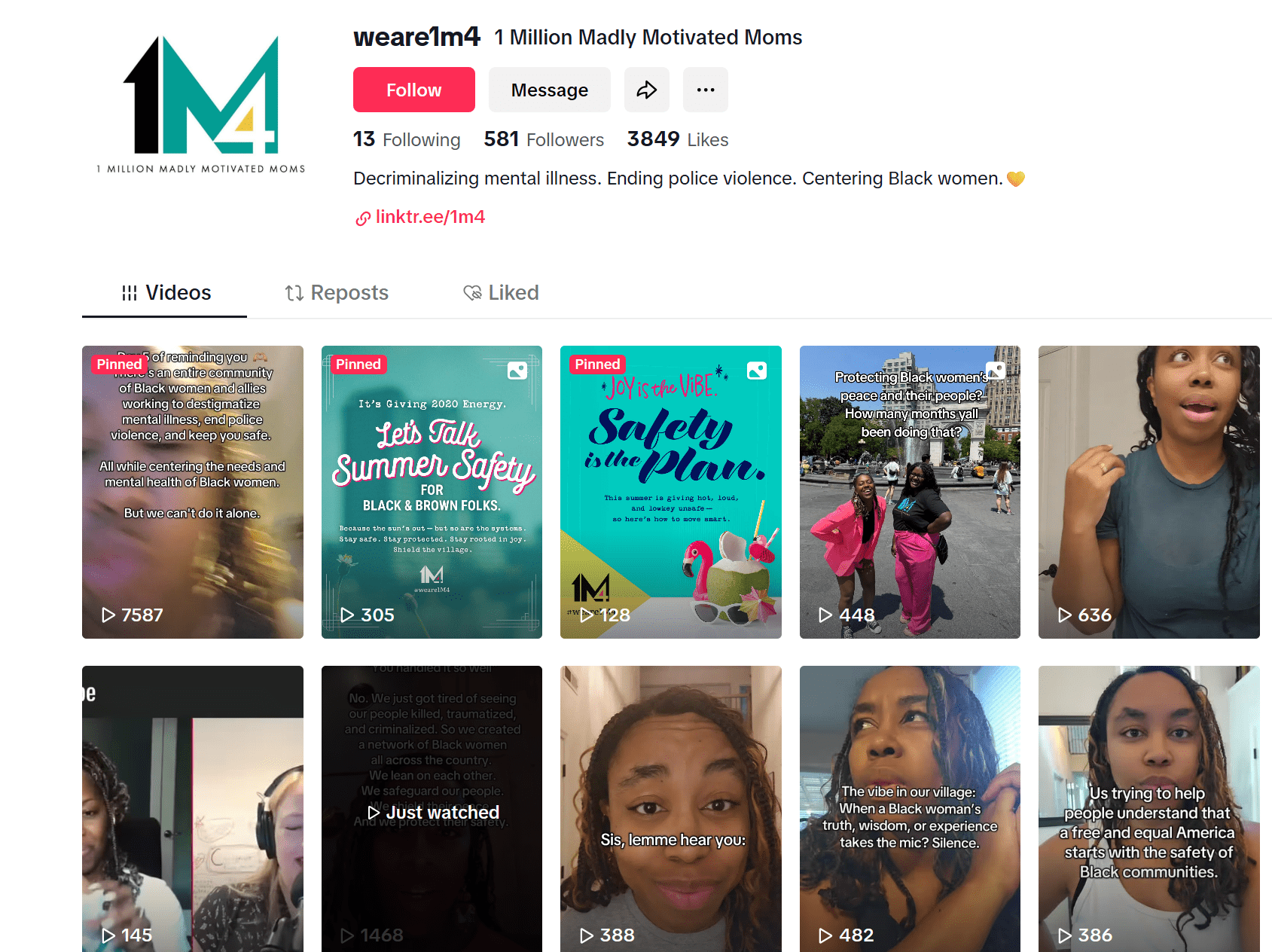
Ok so… we’re on TikTok now! Follow, engage, and rep 1M4 over there. We’re doing our best to reach the people.
Help some Sistas out!


You Got Your 1M4 Merch Yet?
Visit the 1M4 merch store to make sure you’re representing at court support, protests, or in line at your favorite coffee spot. We want to see YOU in your 1M4 gear. Every purchase goes directly to funding the work of 1M4 increasing access to safety and wellness.