There’s a moment many of us know too well when you’re witnessing a dangerous or tense encounter with police. Sirens. Raised voices. A body frozen in fear.
And the quiet question that hits your chest after…should I pull out my phone?
For some of us, filming feels instinctive. For others, it feels dangerous, invasive, or unclear. We’re also taught conflicting lessons. Don’t interfere, don’t escalate, don’t become the next target. And yet, time and time again, we see how the presence or absence of a recording can shape everything that comes next.
This tension isn’t theoretical. It lives in real families, courtrooms, and grief. And for Black communities especially, it sits at the intersection of survival and accountability.
At 1M4, we believe that shielding the village means naming this reality honestly and equipping ourselves with the right knowledge and tools to respond with intention.
“We must use words to uplift and include. We can use our words to fight back against oppression and hate. But we must also channel our words into action.“
— Stacey Abrams
When truth depends on who was watching
We’ve seen it repeatedly: cases where official narratives fall apart only after community footage surfaces. A police report says one thing. A press release confirms it. And then a cell phone video tells a different story entirely.
For families, that difference can mean everything. Without recordings, loved ones are often forced to fight uphill battles just to be believed. Investigations stall, and body camera footage is delayed, withheld, or edited. Without independent evidence, families are too often asked to trust systems that have already failed them.
Even when body cameras exist, they are not neutral guarantees of truth. Cameras are turned off, angles are obscured, or audio is missing. Footage is controlled by the very institutions under scrutiny. In that gap, bystander recordings have become one of the few tools capable of interrupting silence and uplifting transparency.
This isn’t about spectacle or social media outrage. It’s about evidence. It’s always helpful to have time-stamped, independent documentation that can support court cases (criminal and civil), federal reviews, and public accountability. And still, this burden should never have fallen on everyday people just trying to get home safely.
When witnessing becomes evidence
In 2020, the murder of George Floyd was witnessed by millions only because a 17-year-old Black girl, Darnella Frazier, bravely recorded. Her cellphone video directly contradicted early police statements and became central evidence in the criminal trial of Derek Chauvin. Prosecutors publicly stated that without that footage, securing a conviction would have been far more difficult. Chauvin was ultimately found guilty on all counts, one of the rare instances in U.S. history where an officer was convicted for killing a Black man while on duty.
This stood in stark contrast to the legal outcome of Sandra Bland’s death in 2015—a 28-year-old Black woman who died in a Texas jail just days after a traffic stop. While some footage existed, there was no continuous, independent recording of her arrest or time in custody. Notably, Sandra’s own cell phone video captured 39 seconds of the interaction, showing how the officer escalated the encounter and contradicting what was originally available only through dash cam footage. Bland’s family has consistently raised concerns about transparency, accountability, and unanswered questions—concerns echoed by civil rights organizations nationwide. No criminal charges were filed in her death, and the absence of comprehensive footage remains central to why full accountability was never reached.
These cases reflect a broader pattern. According to data compiled by Mapping Police Violence and The Washington Post’s Fatal Force project, a significant share of police killings lack publicly available body camera footage, and departments are not required to release recordings in a timely or complete manner. Independent, community-held recordings—cell phones, security cameras, livestreams—are often the only evidence that challenges official narratives. The literature on body‑worn cameras notes that video footage can lead to faster case resolution and offers better documentation of events, even if its impact on conviction rates varies by context and crime type. Recording doesn’t guarantee justice. But it can mean the difference between a case being dismissed or believed.
The unfair weight placed on bystanders
Let’s be clear: it’s not fair that accountability so often hinges on whether someone nearby had the presence of mind, safety awareness, and courage to hit “record.”
This expectation is deeply unequal. It assumes bystanders know their rights. It assumes they won’t be targeted for filming. It assumes they know where to stand, what to say—or what not to say—to avoid escalation. It also ignores the emotional cost. Filming harm means witnessing harm. It means holding images that don’t disappear when the video ends. For many in our community, it can retraumatize past encounters or fears for our own loved ones.
And yet, we’ve learned, sometimes painfully, that when no one records, families are often left with nothing but official statements that do not reflect what actually happened.
Recording as care, not consumption
At its best, documentation is an act of care. It says you are not invisible and your story matters beyond this moment.
But care requires intention. Filming without awareness can escalate danger. Shouting instructions, moving too close, or drawing attention to oneself can put both the detained person and the bystander at greater risk.
That’s why recording must be paired with training, preparation, and collective responsibility. Shielding the village isn’t about everyone becoming a journalist. It’s about communities understanding how to intervene or document without causing further harm. We need to know when to record, create distance, call for support, and prioritize safety. This is where bystander intervention becomes not just helpful, but essential.
How to intervene and record safely
In response to ongoing violence, we are co-hosting a Bystander Intervention Training with Right To Be on February 10 at 12 PM EST.
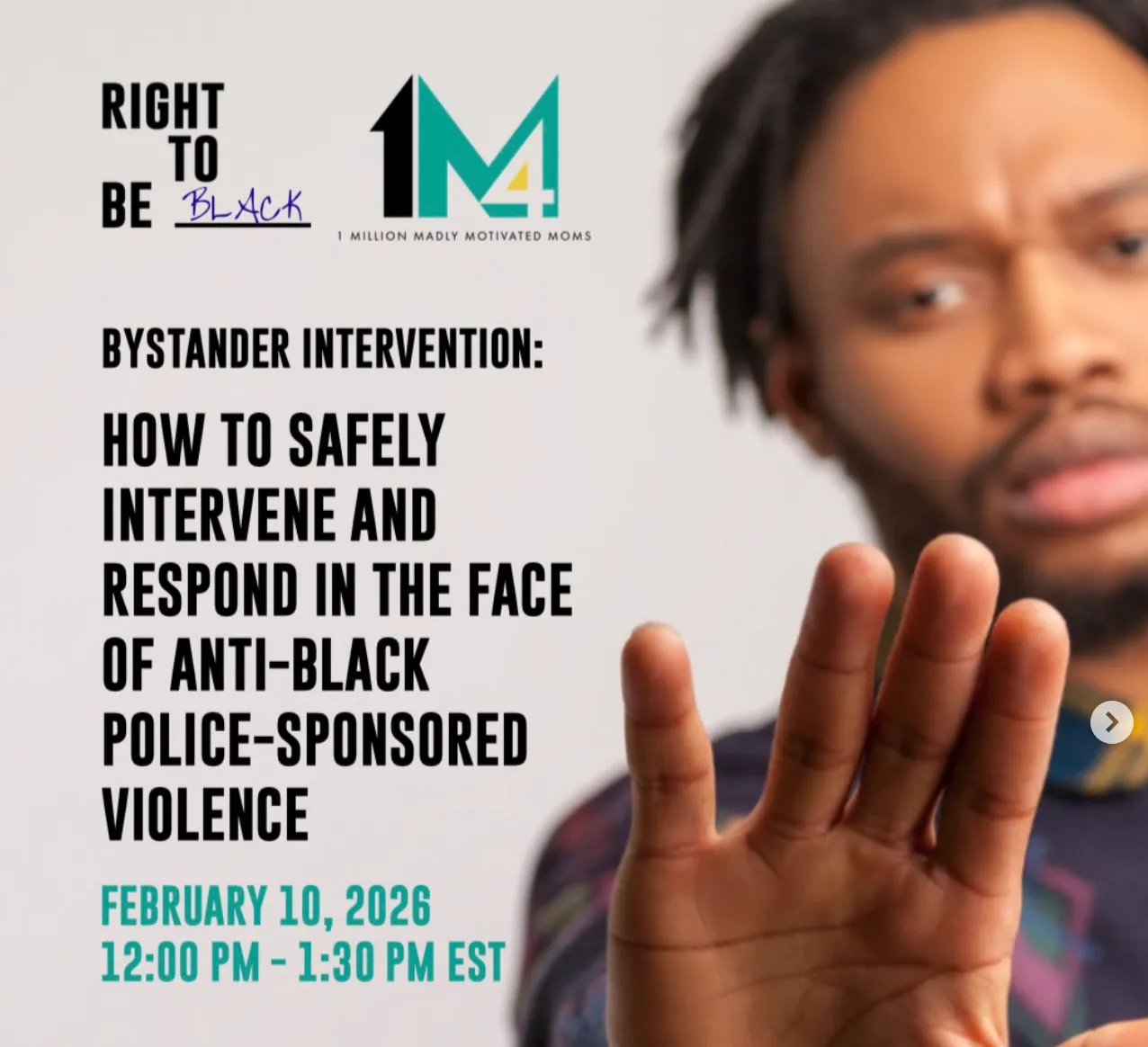
This session will focus on safely intervening and responding in moments of anti-Black, police-sponsored violence with clarity, care, and community at the center.
We can’t control every encounter. But we can reduce harm by building shared skills. Bystander training helps answer the questions many of us carry:
-
How do I record safely without escalating the situation?
-
What are my rights if law enforcement challenges me?
-
How do I support someone being targeted without centering myself?
-
What should I do with footage afterward to protect impacted families?
These aren’t abstract concerns. They’re practical and rooted in lived experience, especially for us as Black women, mothers, and caregivers who are often present when harm occurs. When we train together, we move from reactive witnessing to collective preparedness. That is how we begin to shift power.
If you’ve ever wondered what you should do in that moment—phone in hand, heart racing—this space is for you. And if you have questions you want addressed during the training, we want to hear them. This is a collective learning space, built by and for the village. Because shielding the village isn’t about being fearless. It’s about being prepared together.
Your Sistas Through It All,
The Ladies of 1M4
Spread Some Blessings!
The consequences of police violence extend far beyond the loss of life. For families affected, it’s the loss of income, the sacrifice of basic necessities, and the start of a high-cost legal fight. If you have the capacity, consider donating to 1M4. Proceeds help support impacted families and sustain the work of 1M4 toward ending police violence for good.


Sista Check-In │ February 19
Join the 1M4 circle for a relaxed virtual hangout! Put faces to names, show up as you are, and share what you need or want to build.

To ensure our community has the resources provided by 1M4 and are fully empowered to shield their immediate community from harm, our Founder will hold weekly office hours to answer any questions and walk members through our safety resources.
No registration required. Simply join 1M4 through the button below then tap into our online community at 12pm EST every Tuesday starting this week.
Got a pressing question? Reply here and we’ll answer you via email and first thing Tuesday at noon EST.
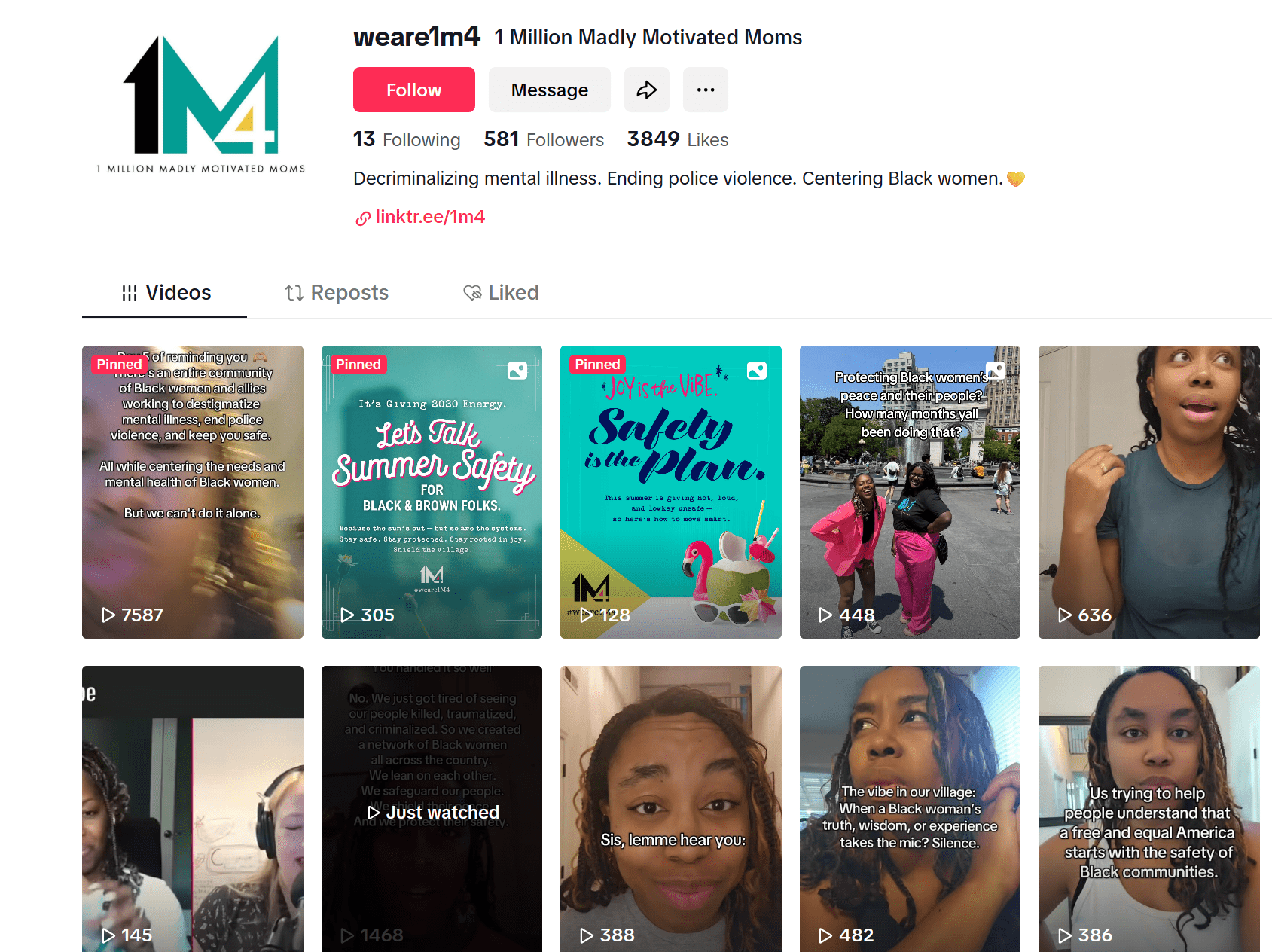
Ok so… we’re on TikTok now! Follow, engage, and rep 1M4 over there. We’re doing our best to reach the people.
Help some Sistas out!


You Got Your 1M4 Merch Yet?
Visit the 1M4 merch store to make sure you’re representing at court support, protests, or in line at your favorite coffee spot. We want to see YOU in your 1M4 gear. Every purchase goes directly to funding the work of 1M4 increasing access to safety and wellness.