To the lives we’ve lost
As we enter Black History Month and the country battles winter storms, the violence that Black communities know all too well carries on. The past few weeks have been marked by loss, not just as headlines, but as lives abruptly and unjustly cut short.
On New Year’s Eve, Keith Porter Jr., a man described by loved ones as someone who “always had a laugh, a joke, a smile,” and affectionately known as a devoted “girl dad,” was shot outside his apartment complex in LA. He left behind two daughters who will now have to reach life’s milestones without their beloved father. Federal officials later said the officer involved was “forced to defensively use his weapon” while responding to an alleged “active shooter.” Much about the incident remains unclear. There is no footage of the shooting, and the family and local activists have disputed that characterization, saying he was not threatening anyone and was simply celebrating the new year.
On January 7, 2026, Renée Good, a 37-year-old woman, was fatally shot in Minneapolis by ICE agent Jonathan Ross. Renée was in her car when agents approached; during the encounter, Ross fired three shots, killing her as her vehicle moved away. Her death sparked national protests and multiple investigations. In the days that followed, Renée’s family called for justice and accountability while urging those moved to outrage to ground their conversations in “humanity, empathy, and care for the family most affected.” They described her as an extraordinary, fiercely loving mother of three who always put her children at the center of her world and was “never defined by malice.”
On January 24, Alex Pretti, an ICU nurse, was shot and killed during a demonstration against ICE in Minneapolis. A nurse whose career was dedicated to saving lives until the very end, Alex was acting in line with his values when he stepped in to help a fellow protester who was violently pushed by ICE agents. Officials claimed that he posed a threat because he had a legally carried gun, but verified video footage shows agents had already taken the gun from his holster and that he was holding a phone, not threatening them, before he was shot. His family shared that he cared deeply about people and was troubled by what was happening in his city and across the country. Those who knew Alex remembered him as a man who loved the outdoors, his dog, and his country—someone whose life, as one mentor said, was just beginning.
“If one really wishes to know how justice is administered in a country, one does not question the policemen, the lawyers, the judges, or the protected members of the middle class. One goes to the unprotected—those, precisely, who need the law’s protection most—and listens to their testimony.“
— James Baldwin
For some of us, this isn’t new
On the first day of Black History Month, we are called to hold both realities at once: to honor every individual and to name the racial inequities that determine whose suffering is seen and amplified. Unfortunately, Keith, as a Black man, did not receive nearly the same news coverage. And Black women like 21-year-old Ta’Kiya Young, whose life—and the life of her unborn child—were cut short during an encounter with police, are too often remembered only briefly, if at all.
The debate around the use of #SayHerName after Renée Good’s death—a hashtag created to uplift the names and stories of Black women and girls killed by police violence—reflects why many in our community were thoughtful and, at times, cautious about applying it in this case. The movement exists precisely because Black women’s deaths are so often erased or overshadowed. Renée’s killing sparked widespread chants, protests, and national attention, while Keith’s name remained far less visible despite similar calls for justice.
Is it because we didn’t have videos of Keith’s murder circulating like the others? Is it because media attention is more attuned to Minneapolis right now, given the administration’s recent actions? Or is it because so many of us have grown sadly accustomed to seeing Black bodies harmed, so it no longer shocks the general public? Perhaps, for the first time, some are only starting to connect the dots when it happens to people who look like them.
This violence didn’t start with ICE
To fully grasp what’s unfolding now, it helps to zoom out. What we’re witnessing didn’t start this year, or with ICE, or in one city. It sits inside a much longer history of state-sanctioned violence against Black people in this nation.
From the era of the Ku Klux Klan, whose terror campaigns enforced white supremacy through lynchings and intimidation, to police violence during the Civil Rights Movement, when marchers were beaten and jailed for demanding basic rights, Black communities have long faced disproportionate harm from those charged with “protecting” the public. We must never forget the killings of George Floyd and Breonna Taylor, and more recent cases like James “Roe” Williams, who was shot on New Year’s Day, and Stephon Clark, who was killed in his grandmother’s backyard after police claimed he had a gun even though he was unarmed—similar to Alex Pretti. Lethal force is still too often applied first, with accountability coming later…if it comes at all. These tragedies underscore a persistent pattern of state violence in which Black lives are repeatedly lost during everyday encounters with police.
Stanford’s Say Their Names – No More Names exhibit offers a broader look at how many Black people continue to be killed in similar circumstances.
This pattern didn’t disappear with federal immigration enforcement. It simply changed shape. Across the country, ICE and other federal agencies have intensified raids, stops, and patrols in ways civil rights groups say are arbitrary, racially biased, and deeply destabilizing—not just for undocumented people, but for entire communities. For example, Human Rights Watch has documented hundreds of raids in and around LA targeting Latino communities and seizing individuals without clear justification. It’s incredibly sad to hear about families being separated, people losing their businesses, and people living in fear simply for existing in their communities.
What this looks like in practice:
-
Racial profiling. Black and Brown people, including U.S. citizens, report being stopped or questioned based on appearance, language, or neighborhood rather than individualized suspicion. This has been especially alarming for Black immigrant communities, including Somali Americans in Minnesota.
-
Aggressive raids and use of force. ICE operations in multiple states have used force against people who were unarmed, non-threatening, or simply nearby. Journalists, bystanders, and peaceful protesters have also reported being injured during enforcement actions.
-
Enforcement in everyday spaces. ICE agents have been reported at workplaces, mosques, schools, and community gathering places—locations central to daily life and safety—creating fear that extends far beyond those being targeted.
-
Masked or unidentified agents. In many cities, people describe being approached by agents in masks or unmarked gear, making it difficult to know who is detaining them or how to report misconduct.
-
Disproportionate impact on Black immigrants. Black immigrants from Somalia, Haiti, Jamaica, and across the African diaspora face higher rates of detention and deportation and are more likely to experience violence during encounters with law enforcement.
-
Little meaningful oversight. ICE operates with limited transparency. Agents aren’t required to wear body cameras, internal discipline is seemingly absent, and there’s no independent civilian review board with subpoena power. Agents are also frequently shielded from prosecution, even in fatal cases. And once someone is placed in ICE custody, accountability often weakens further: tracking is inconsistent, public reporting is limited, and families and advocates are frequently left without clear answers when serious harm or death occurs. The outcome is a system where people can effectively disappear from public view after detention, exposing how deeply broken and dangerous this lack of oversight truly is.
Power without oversight
Civil liberties organizations like the ACLU have warned that ICE’s expanding authority and budget have not been matched with real safeguards. Yet the current administration refuses to back down. Last year, the administration also cut funding for ICE body cameras and pared back key oversight offices within the Department of Homeland Security, substantially reducing transparency and capacity to investigate misconduct.
This broader context is not separate from the individual tragedies we’ve named. It is the environment in which they happened. The shootings, raids, and aggressive enforcement actions happening now are rooted in a long tradition of racialized policing and federal overreach. One that disproportionately harms Black, Brown, and immigrant communities while shielding power from scrutiny.
Turning grief into care
And for many of us, especially Black Americans, this again isn’t new. It’s familiar. It’s lived. Which raises a harder, more personal question: why does it still take this much violence, and whose bodies, for the country to pay attention?
At 1M4, we believe that honoring lives lost means more than naming injustice after the fact. It means building a world where fewer families ever have to grieve like this at all. Our work is rooted in the understanding that safety, care, and accountability must come before force. That communities deserve tools, resources, and responses grounded in humanity rather than harm.
We mourn Keith, Renée, and Alex, and all those whose lives were taken in recent ICE encounters. And we remain committed to doing the work that insists on protection and care.
Spread Some Blessings!
The consequences of police violence extend far beyond the loss of life. For families affected, it’s the loss of income, the sacrifice of basic necessities, and the start of a high-cost legal fight. If you have the capacity, consider donating to 1M4. Proceeds help support impacted families and sustain the work of 1M4 toward ending police violence for good.

Intervene Safely: Bystander Training | Feb 10
In response to the ongoing violence and to equip our communities with practical tools, 1M4 is co-hosting a Bystander Intervention Training with Right To Be on February 10 at 12 PM ET. This webinar training will teach how to safely intervene and respond in the face of anti-Black, police-sponsored violence.
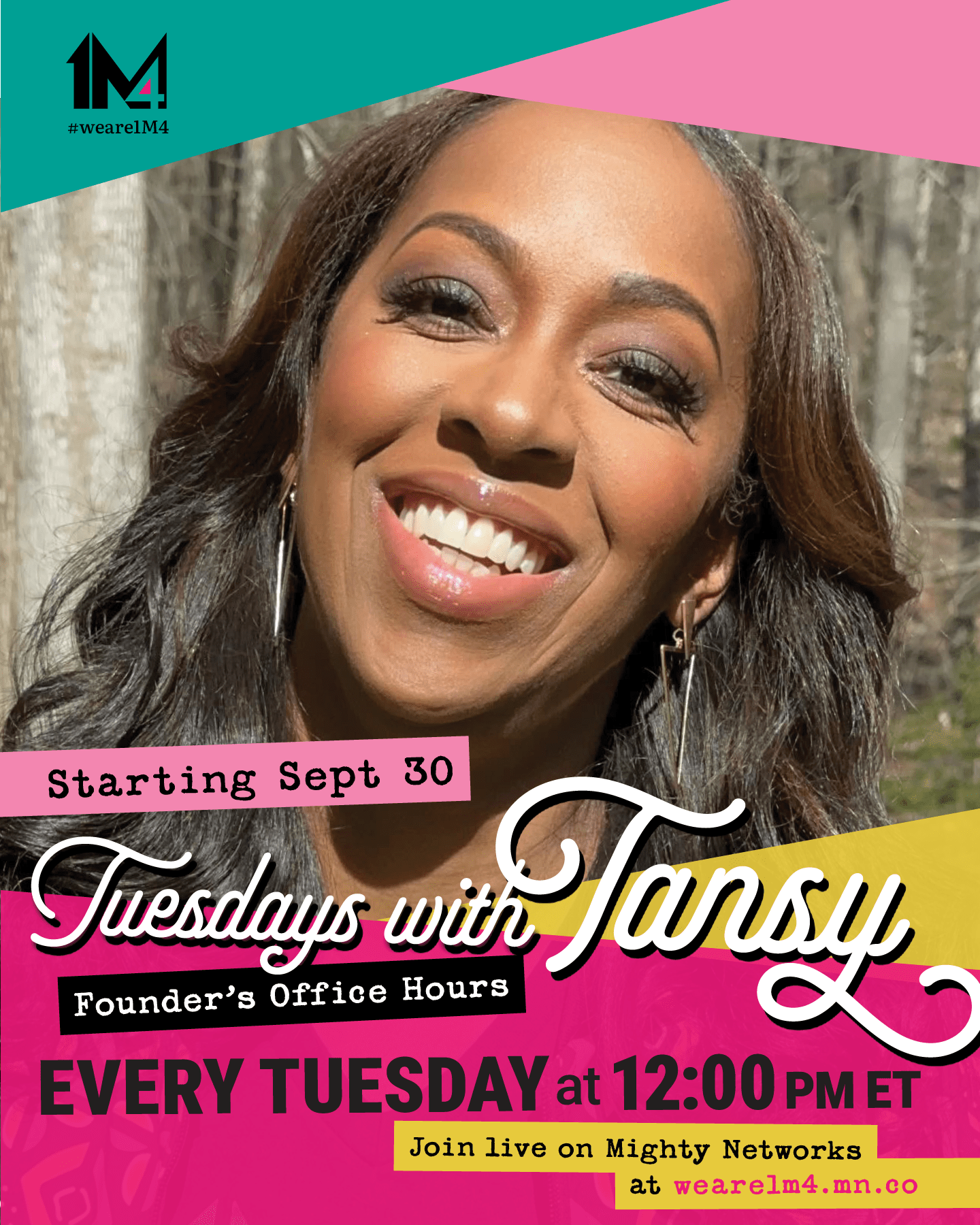
To ensure our community has the resources provided by 1M4 and are fully empowered to shield their immediate community from harm, our Founder will hold weekly office hours to answer any questions and walk members through our safety resources.
No registration required. Simply join 1M4 through the button below then tap into our online community at 12pm EST every Tuesday starting this week.
Got a pressing question? Reply here and we’ll answer you via email and first thing Tuesday at noon EST.
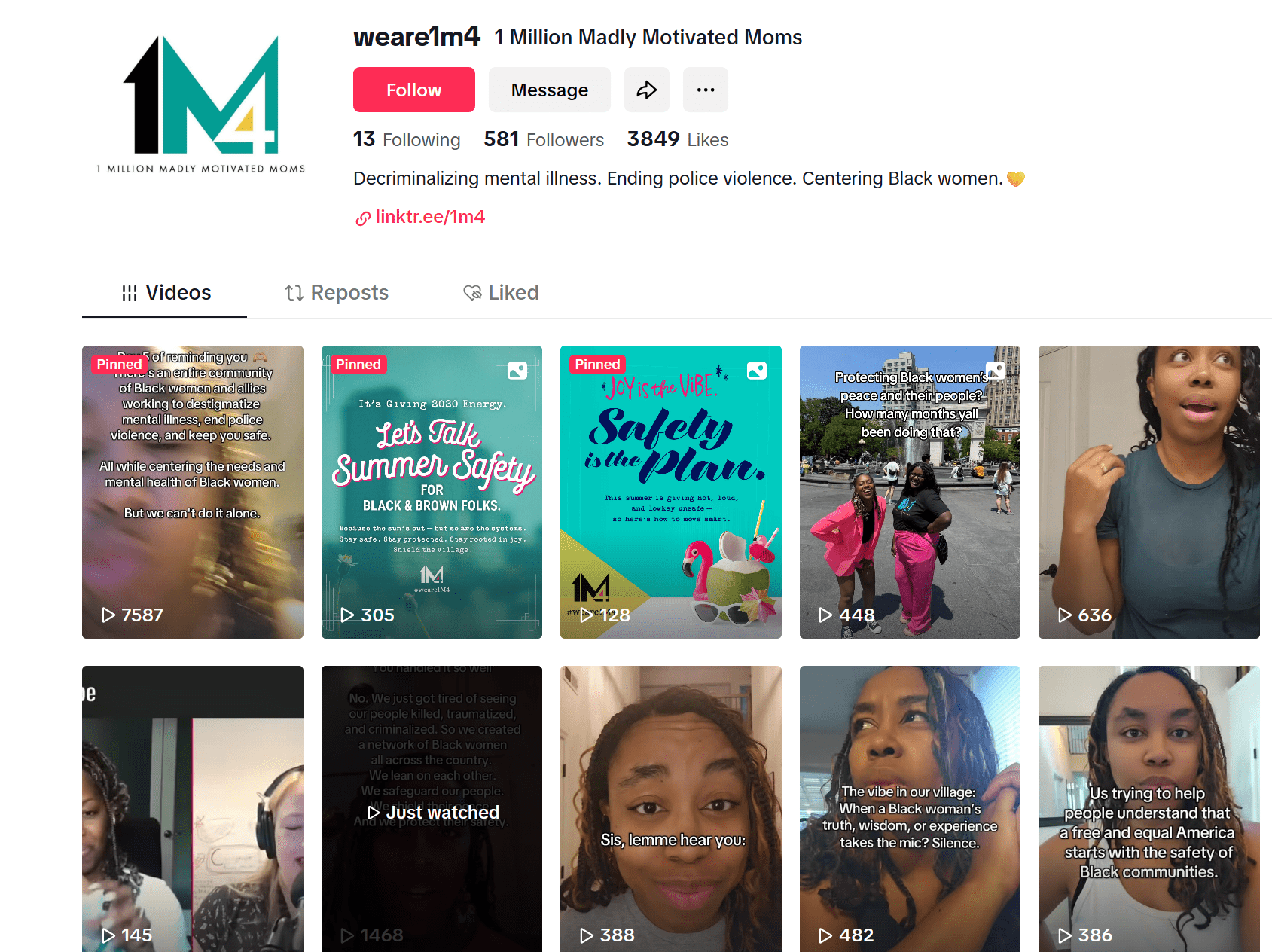
Ok so… we’re on TikTok now! Follow, engage, and rep 1M4 over there. We’re doing our best to reach the people.
Help some Sistas out!


You Got Your 1M4 Merch Yet?
Visit the 1M4 merch store to make sure you’re representing at court support, protests, or in line at your favorite coffee spot. We want to see YOU in your 1M4 gear. Every purchase goes directly to funding the work of 1M4 increasing access to safety and wellness.